Asegurar el factor humano: cómo el Human Risk Intelligence reescribe las reglas del ciberseguro

Table of contents
Subscribe to newsletter
Las aseguradoras de ciberriesgo ya no se conforman con la prueba de que los empleados han recibido formación. Cada vez más, quieren evidencias de que el riesgo humano se mide y se reduce. Ese cambio está transformando las solicitudes, las primas y las negociaciones de renovación.
El ciberseguro ha dedicado años a evaluar controles técnicos como firewalls, protección de endpoints y copias de seguridad. Ahora, los suscriptores aplican el mismo escrutinio al riesgo humano, y muchas organizaciones siguen sin tener las evidencias que demuestren que está bajo control.
El mercado asegurador hace preguntas distintas
Las solicitudes de ciberseguro estuvieron dominadas durante años por simples preguntas de sí o no: ¿hay un firewall? ¿Se mantienen las copias de seguridad? ¿Está desplegado el antivirus? Las pólizas se tarificaban a menudo según la existencia de los controles, no según su eficacia real para reducir el riesgo.
Ese enfoque está cambiando. El aumento de las pérdidas por ransomware, de las reclamaciones por interrupción de negocio y de las sanciones regulatorias ha obligado a las aseguradoras a evaluar el riesgo con mayor rigor. Muchas brechas graves no empiezan con el fallo de un control técnico, sino con credenciales comprometidas, ingeniería social o prácticas de identidad deficientes.
Como resultado, las preguntas de suscripción son más específicas y se centran más en el comportamiento. Las aseguradoras pueden preguntar hasta qué punto se aplica realmente la autenticación multifactor, cómo evolucionan los resultados de phishing o si se identifican y eliminan las cuentas inactivas. Quienes pueden aportar evidencias actuales y continuas están mejor posicionados para demostrar una gestión eficaz del riesgo.
Por qué los atacantes siguen aprovechándose de las personas
Los equipos de seguridad han reforzado notablemente sus defensas técnicas. Los firewalls, la detección en endpoints y las arquitecturas zero trust han madurado. En respuesta, los atacantes se han centrado cada vez más en un control mucho más difícil de estandarizar: el criterio humano.
La ingeniería social eficaz está diseñada para parecer rutinaria. Una solicitud maliciosa puede parecerse a un restablecimiento de contraseña, a una factura o a la llamada de un compañero. En lugar de despertar sospechas, aprovecha comportamientos familiares y procesos de confianza. Los incidentes recientes muestran por qué las aseguradoras tratan cada vez más esta exposición como una cuestión relevante de suscripción.
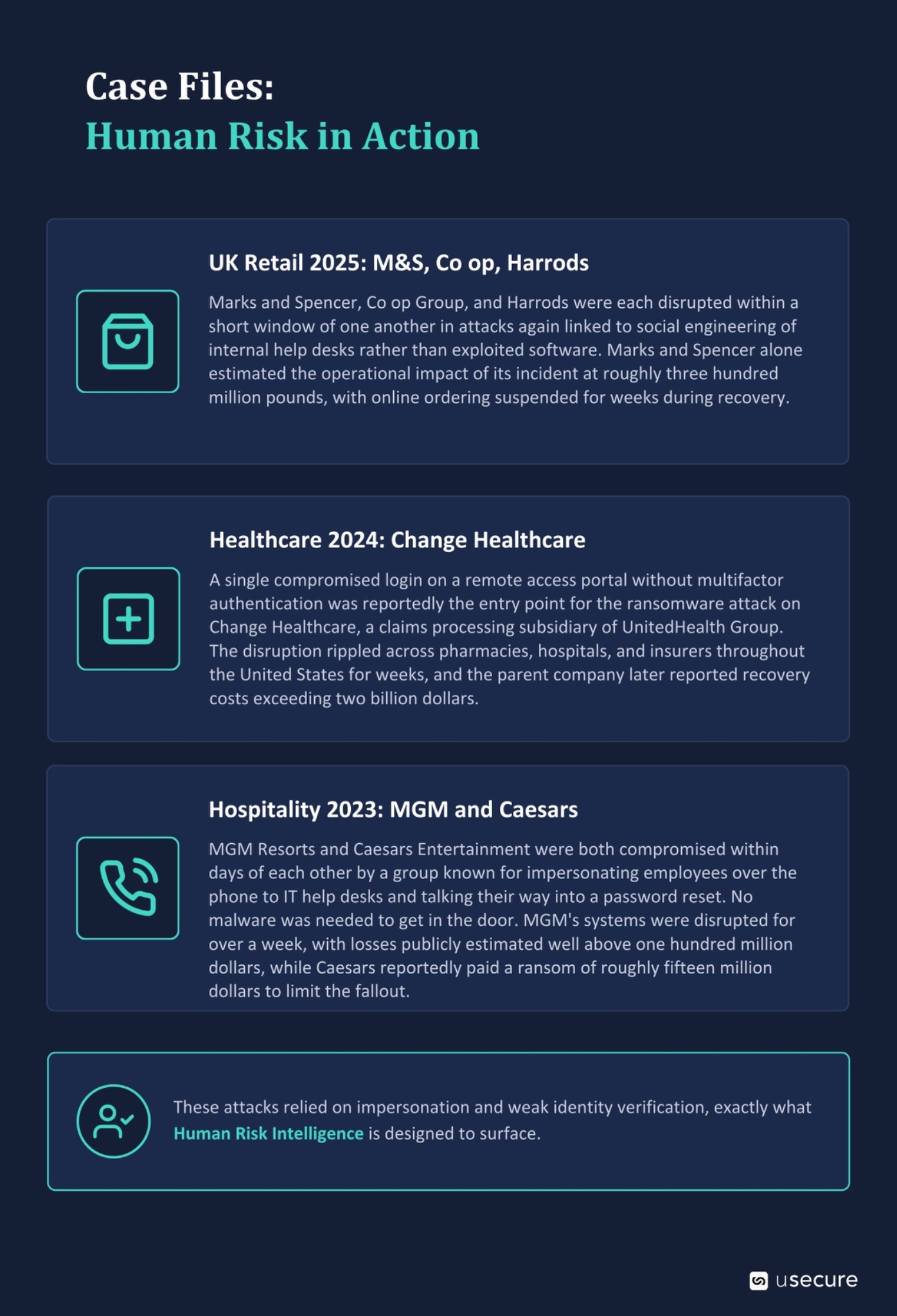
Estos incidentes no dependieron de exploits novedosos. Se basaron en suplantaciones convincentes, en una verificación de identidad débil o en credenciales comprometidas: precisamente el tipo de exposición que el Human Risk Intelligence está diseñado para detectar antes de que se convierta en un siniestro.
Qué dicen los datos sobre el riesgo humano
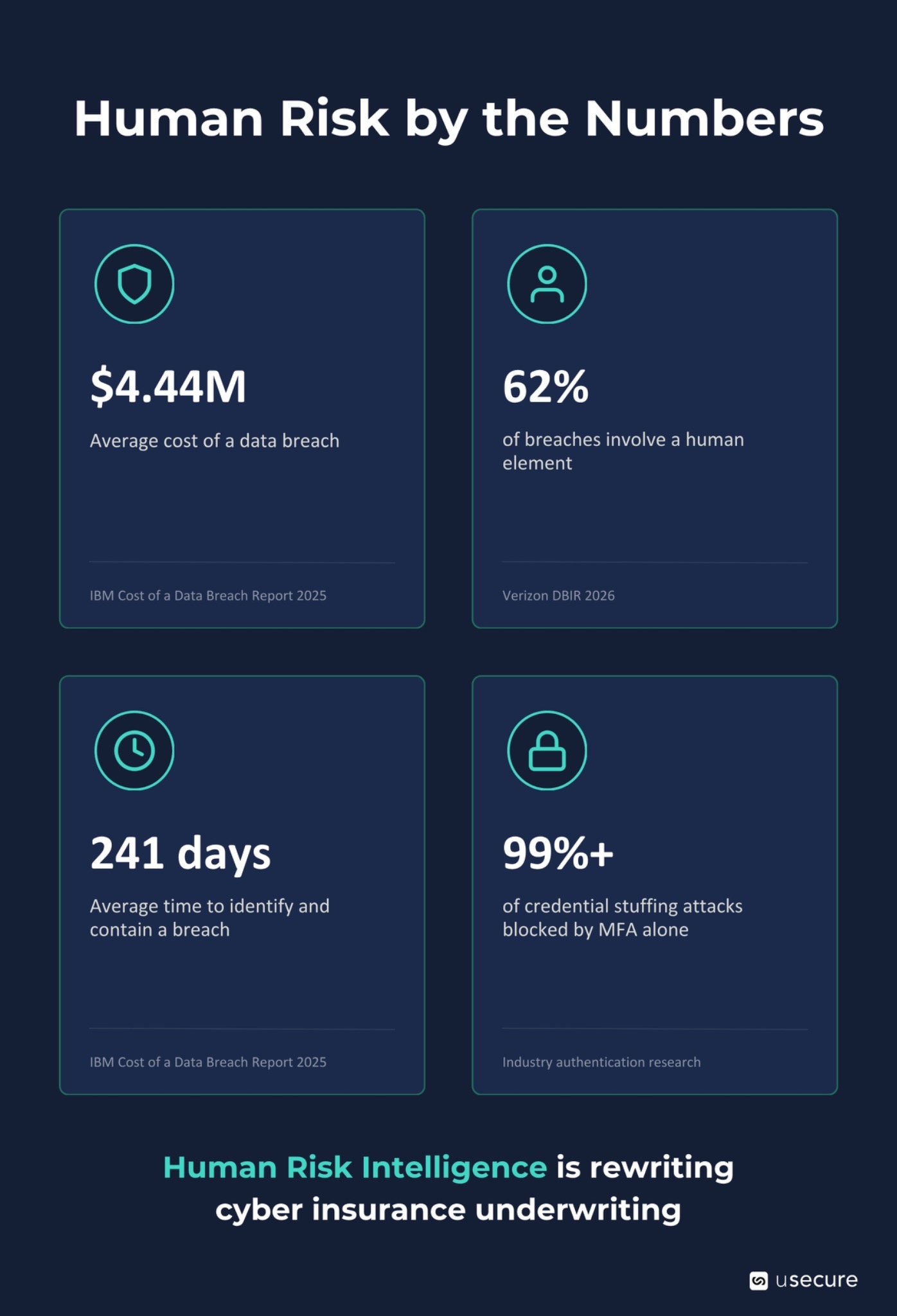
La investigación del sector ayuda a explicar por qué las reducciones medibles del riesgo humano son cada vez más relevantes en las conversaciones de suscripción y renovación. Las cifras siguientes reflejan la magnitud, la persistencia y el impacto económico de la exposición cibernética ligada a las personas.
Cómo evalúan los suscriptores el riesgo humano
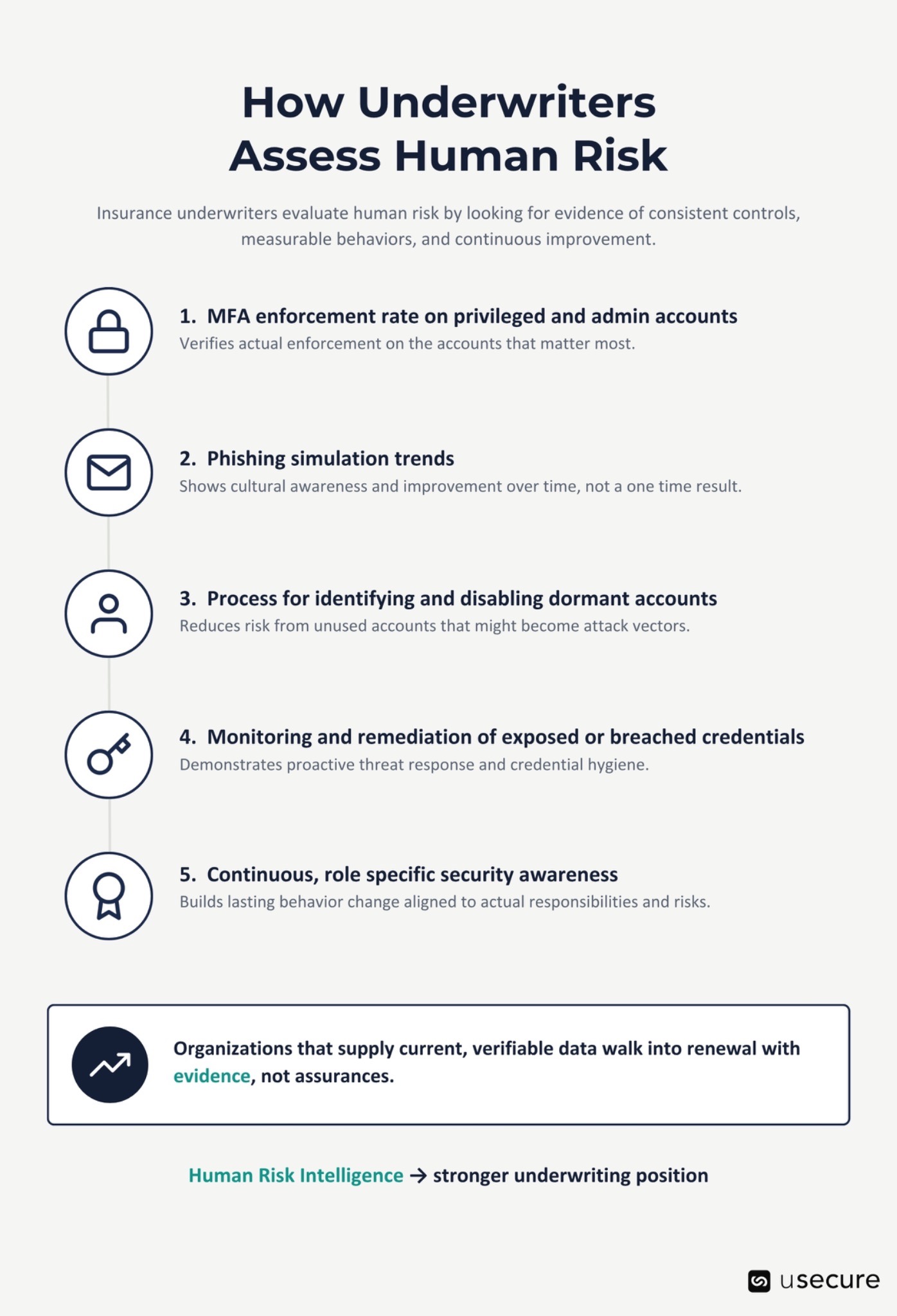
Los cuestionarios de renovación se han vuelto más largos, más detallados y más centrados en el comportamiento y la identidad. Los suscriptores quieren cada vez más evidencias de:
- La proporción de cuentas privilegiadas y administrativas con autenticación multifactor realmente aplicada, no solo disponible
- Las tasas de clic y de notificación de las simulaciones de phishing a lo largo de varios ciclos, y no un único resultado reciente
- Los procesos para identificar, revisar y deshabilitar cuentas inactivas
- La monitorización y remediación de credenciales expuestas o comprometidas
- Formación continua en concienciación de seguridad adaptada al rol, en lugar de un único ejercicio anual de cumplimiento
En conjunto, estas preguntas equivalen a una evaluación práctica del Human Risk Intelligence, aunque no se use ese término. Las organizaciones que pueden responder con datos actuales y verificables están mejor preparadas para respaldar las decisiones de suscripción y abordar cuestiones sobre exclusiones, primas o cobertura frente a la ingeniería social.
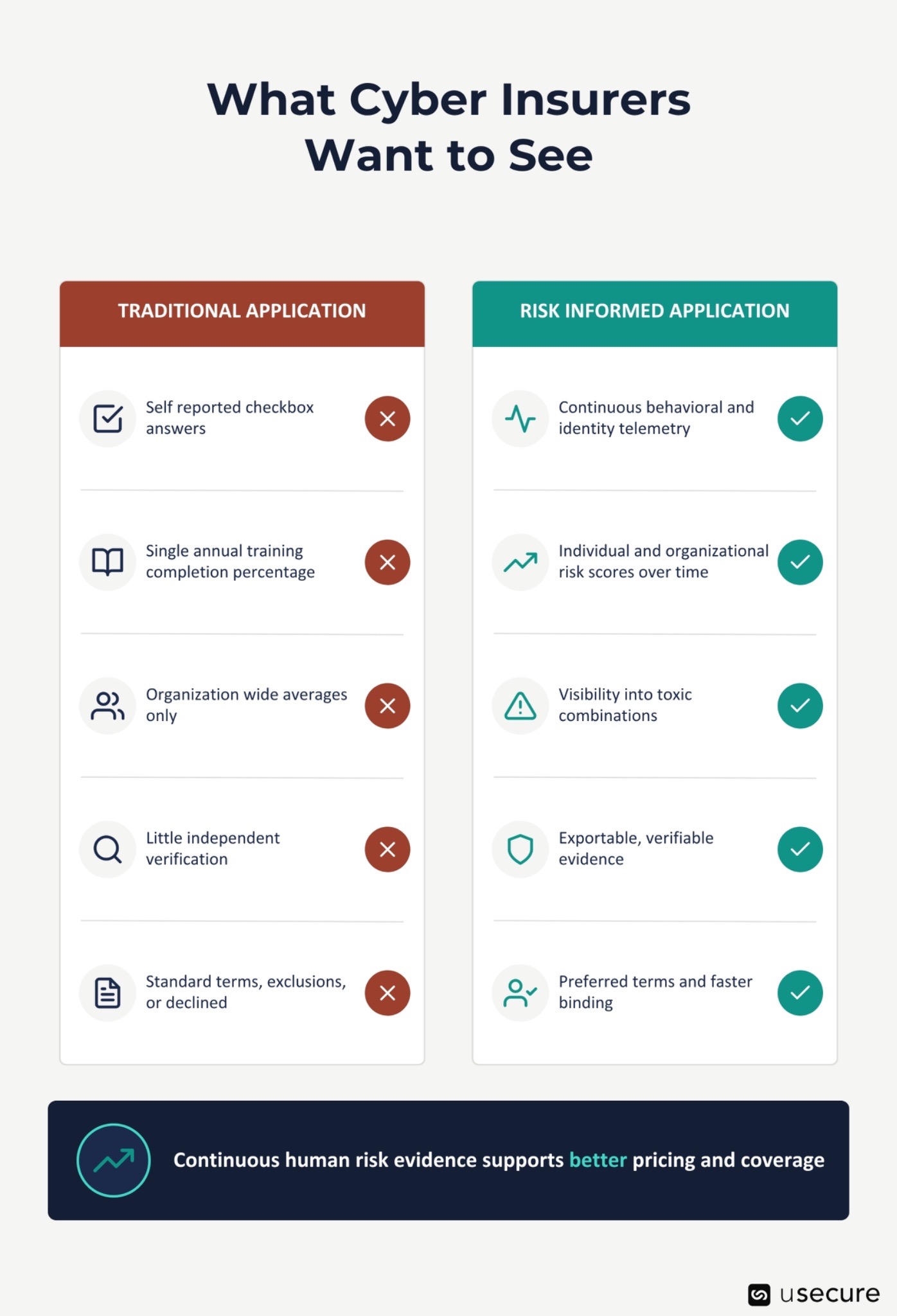
Reforzar la solicitud: qué quieren ver las aseguradoras
Las evidencias continuas de riesgo humano no solo mejoran la presentación de una solicitud. Dan a los suscriptores información que pueden verificar, y esa verificación permite una evaluación y una tarificación del riesgo más seguras.
Reducir las primas mediante una reducción medible del riesgo
Las conversaciones sobre primas también están pasando de la prueba de actividad a la prueba de resultados. Que una organización haya comprado formación o realizado un ejercicio anual de phishing es útil, pero no demuestra que la exposición esté bajando realmente. Los corredores tienen mucho más margen cuando pueden demostrar una reducción sostenida del riesgo.
Las métricas más relevantes coinciden con las que ya usan los responsables de seguridad para evaluar la eficacia de sus programas:
- Una puntuación de riesgo humano descendente por departamentos y en toda la organización, en lugar de una tasa estática de formaciones completadas
- Una mejora en las tendencias de las simulaciones de phishing, con tasas de notificación al alza y tasas de clic a la baja
- Una cobertura creciente de la autenticación multifactor en cuentas privilegiadas y administrativas, y no solo medias de toda la empresa
- Una mejora de la higiene cibernética, señal de que se están cerrando las vías de ataque más probables
Mejorar en estas métricas puede reforzar las negociaciones de renovación al sustituir garantías genéricas por una tendencia de riesgo demostrable. También ayuda a las aseguradoras a valorar con qué eficacia una organización reduce las exposiciones que con más probabilidad derivan en un siniestro.
Apoyar el proceso de siniestros tras un incidente
El valor de estas evidencias continúa después de contratar la póliza. Tras un incidente, las aseguradoras pueden examinar si existían controles razonables en el momento de la pérdida. Las puntuaciones de riesgo históricas, los registros de remediación y el histórico de cobertura de autenticación multifactor ofrecen un respaldo probatorio mucho más sólido que un certificado anual de formación completada.
Las expectativas regulatorias avanzan en la misma dirección. Bajo marcos como el GDPR, las sanciones pueden alcanzar los 20 millones de euros o el 4 % de la facturación anual global. Documentar cómo se identifica y gestiona el riesgo humano puede respaldar, por tanto, no solo las conversaciones con la aseguradora, sino también requisitos más amplios de gobernanza y cumplimiento. En todas estas funciones, la exigencia común es cada vez más clara: evidencias actuales y a nivel individual, en lugar de una foto fija una vez al año.
La métrica de consejo del futuro
La gobernanza de la ciberseguridad y la suscripción de ciberseguros convergen en la misma exigencia: una cifra creíble y defendible que muestre que el riesgo humano evoluciona en la dirección correcta con el tiempo. Históricamente, el rendimiento en seguridad se medía con indicadores técnicos como las tasas de parcheo o la cobertura de endpoints. Cada vez más, se esperará que los directivos demuestren que el riesgo humano se mide, se supervisa y se reduce con el mismo rigor.
Las organizaciones que hoy construyan una visibilidad real de su superficie de ataque humana no solo reducirán la probabilidad de un incidente costoso. Llegarán a su próxima renovación con evidencias en lugar de promesas, y pagarán por el riesgo que realmente asumen en lugar del riesgo que un suscriptor debe presuponer en su nombre. Descubre el Human Risk Intelligence o reserva una demo para ver cómo puede reforzar tu posición en ciberseguro.
BOOK A DEMO
See Human Risk Intelligence in action
A 30-minute walkthrough of how to cut human risk across your users, tailored to MSPs and IT teams.
Subscribe to newsletter

Descubre cómo las empresas de servicios profesionales reducen el riesgo humano con usecure
Descubre cómo los equipos de TI de servicios profesionales usan usecure para proteger los datos confidenciales de sus clientes, mantener el cumplimiento normativo y salvaguardar su reputación, sin interrumpir el trabajo facturable.
Related posts
Explore more insights, updates, and resources from usecure.