Your people are the attack surface.
Now you can see it.
usecure connects awareness, identity, breach and access signals to show where risk sits, who carries it and what to fix first.











The program runs. The risk stays hidden.
Training, phishing, identity, access and breach tools all generate signals. Kept apart, they cannot show who is truly exposed or what to fix first.
The signals stay disconnected.
Training, phishing, identity and credential risks sit in separate tools.
Activity hides the outcome.
Completion, click and sign-off rates show activity, not reduced risk.
The next action stays unclear.
More signals mean more manual triage and less clarity on what to fix first.
One organization or a hundred clients, the challenge is the same: connect signals without adding manual work.
Turn scattered risk data into decisions.
Human Risk Intelligence connects program activity with identity and access data, showing where exposure sits and what to do next.
A discipline, not a dashboard.
HRI turns disconnected signals into context, priorities and action.
Awareness, phishing, policy and breach activity show what each person knows and does.
MFA, credentials, accounts and privilege show how likely compromise is and how much damage it could cause.
Human Risk Management runs the program. Human Risk Intelligence shows where to focus and whether risk is falling.
Read every person in context.
Four connected pillars show who is likely to be targeted, how exposed they are and what compromise could unlock.

Target Value
How attractive or useful the person is to an attacker — role and seniority, financial authority and external visibility.


Awareness
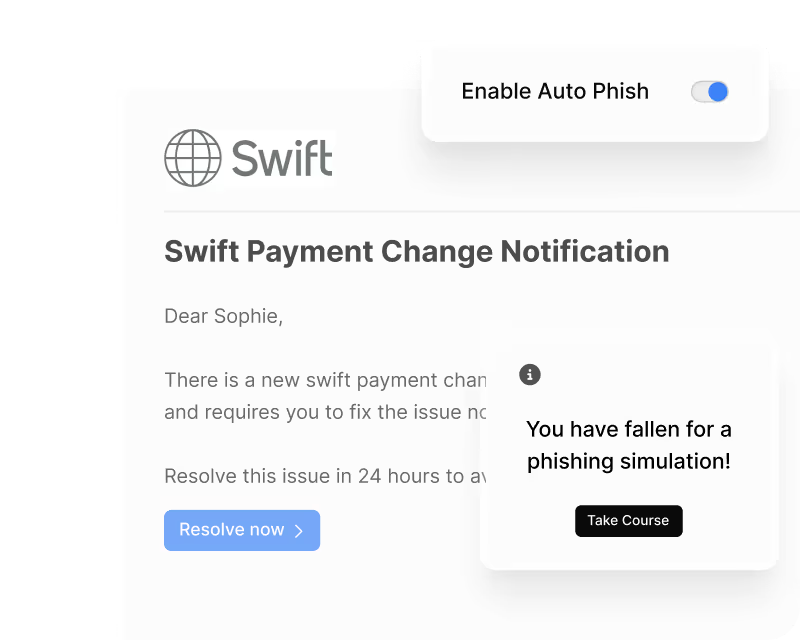
What they know and how they behave when tested — training performance, phishing outcomes and reporting behavior.

Hygiene
How securely their identity and accounts are configured — MFA strength, exposed credentials and dormant accounts.

Access
What an attacker could reach after compromise — admin privileges, financial permissions and sensitive data.
Move from program activity to prioritized action.
Four connected steps take you from scattered program activity to prioritized action you can prove.
Run the program
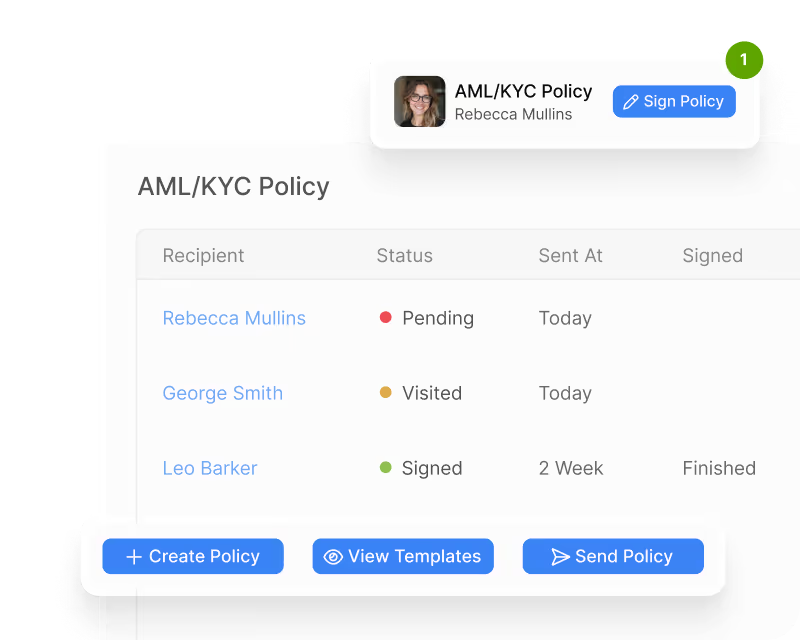
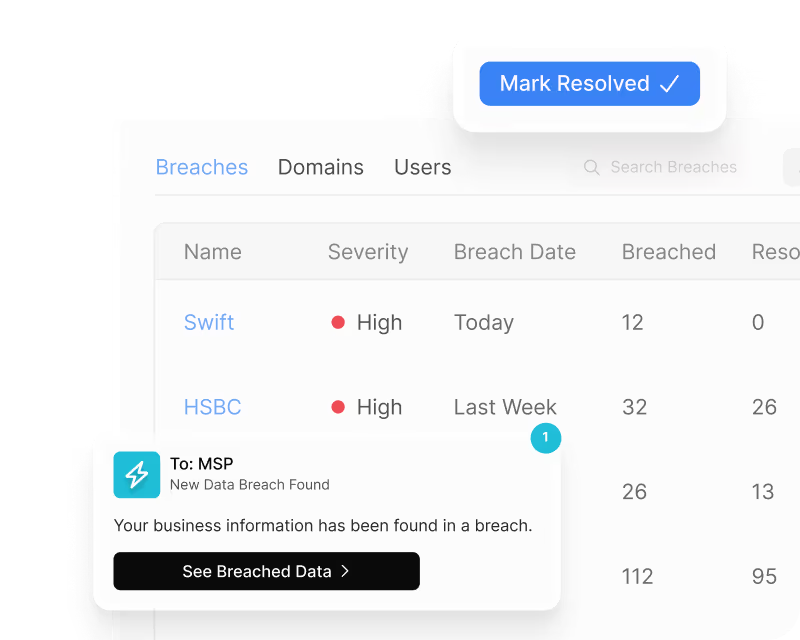
uLearn, uPhish, uPolicy and uBreach create behavioral and exposure signals.
Read the reality
Connect Microsoft 365 and Google Workspace identity, hygiene and access data.
Connect one view
Score each person across the four pillars and surface combined exposure.
Act and prove
Put the next action beside the risk and track whether exposure falls.
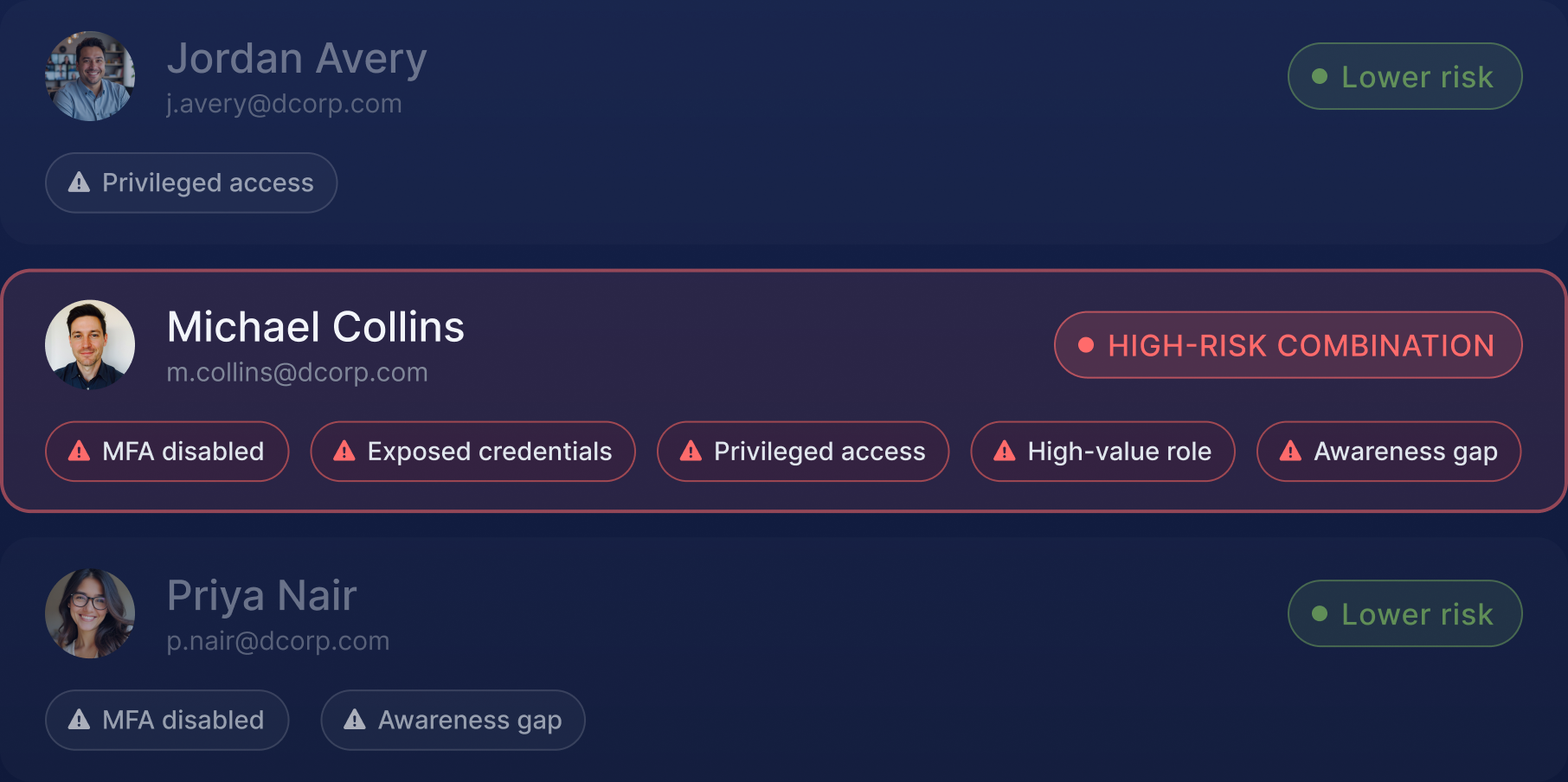
Minor alone. Critical together.
HRI shows when everyday weaknesses combine into the exposure attackers are most likely to exploit.
Run the program. Turn it into intelligence.
usecure runs the human risk program and connects it to real identity signals, turning activity into clear priorities and measurable progress.
uHealth is the intelligence layer.
Not another point tool. uHealth connects the signals above with Microsoft 365 and Google Workspace data to score risk, surface Toxic Combinations and prioritize action across your whole identity environment.
Human risk reduction you can show.
Customers already use usecure to reduce human risk. HRI adds the context to focus action and show progress.
“The selection of courses and phishing templates available was a key benefit. The automation features saved us a lot of time, and being able to understand our company’s human risk at a glance has been invaluable.”
See what is changing and what to do next.
Explore the shift from awareness metrics to connected, measurable human risk reduction.
Read the HRI Report
See it. Fix it. Prove it.
See it
One view of where human risk sits, across the organization and every individual.
Fix it
Rank the actions that reduce the most risk, not simply the easiest tasks to close.
Prove it
Show leadership, clients and auditors whether exposure is moving in the right direction.
One view, whether you manage one organization or many.
Proactive IT teams
Evidence, not gut feel. See what needs attention, focus remediation and show leadership how exposure is changing.
Modern MSPs
Priorities at scale. See which clients, users and actions need attention first, without adding more manual triage.
Understand how HRI fits.
Human Risk Intelligence combines human behavior, awareness, identity hygiene, access and business-context signals to explain where exposure sits, why it matters, what to address first and whether risk is improving.
Human Risk Management operates the program through training, phishing, policy management, breach monitoring and reporting. HRI builds on those foundations by adding identity, hygiene, access and business context to prioritize action and measure exposure.
The four pillars are Target Value, Awareness, Hygiene and Access. Together, they describe who attackers are likely to target, how users respond, how securely identities are configured and what an attacker could reach following compromise.
uHealth is the Human Risk Intelligence layer of the usecure platform. It connects signals across the four pillars, identifies Toxic Combinations, prioritizes remediation and tracks how risk changes over time. It works alongside uLearn, uPhish, uPolicy and uBreach.
Start turning human risk into action.
Connect the signals, focus remediation and prove improvement.