SOC 2 Compliance: Turning Human Risk Signals into Trust Services Criteria Evidence


Table of contents
Subscribe to newsletter
SOC 2 compliance stands as a gold standard for service providers handling sensitive information. It assures clients and partners that systems are secure and trustworthy. Every year, thousands of organizations invest months of effort preparing for a SOC 2 audit. They patch their servers, document their access control policies and configure their SIEM alerts. Yet many organisations struggle with one persistent challenge: human behaviour often introduces risks that are difficult to quantify and demonstrate during audits.
Human Risk Intelligence (HRI) offers a powerful solution. It turns scattered signals from employee actions, training results, and access patterns into clear, actionable evidence. Many organizations have adopted HRI to strengthen their compliance efforts in SOC 2.
The Human Element: Why It Dominates Risk in Compliance
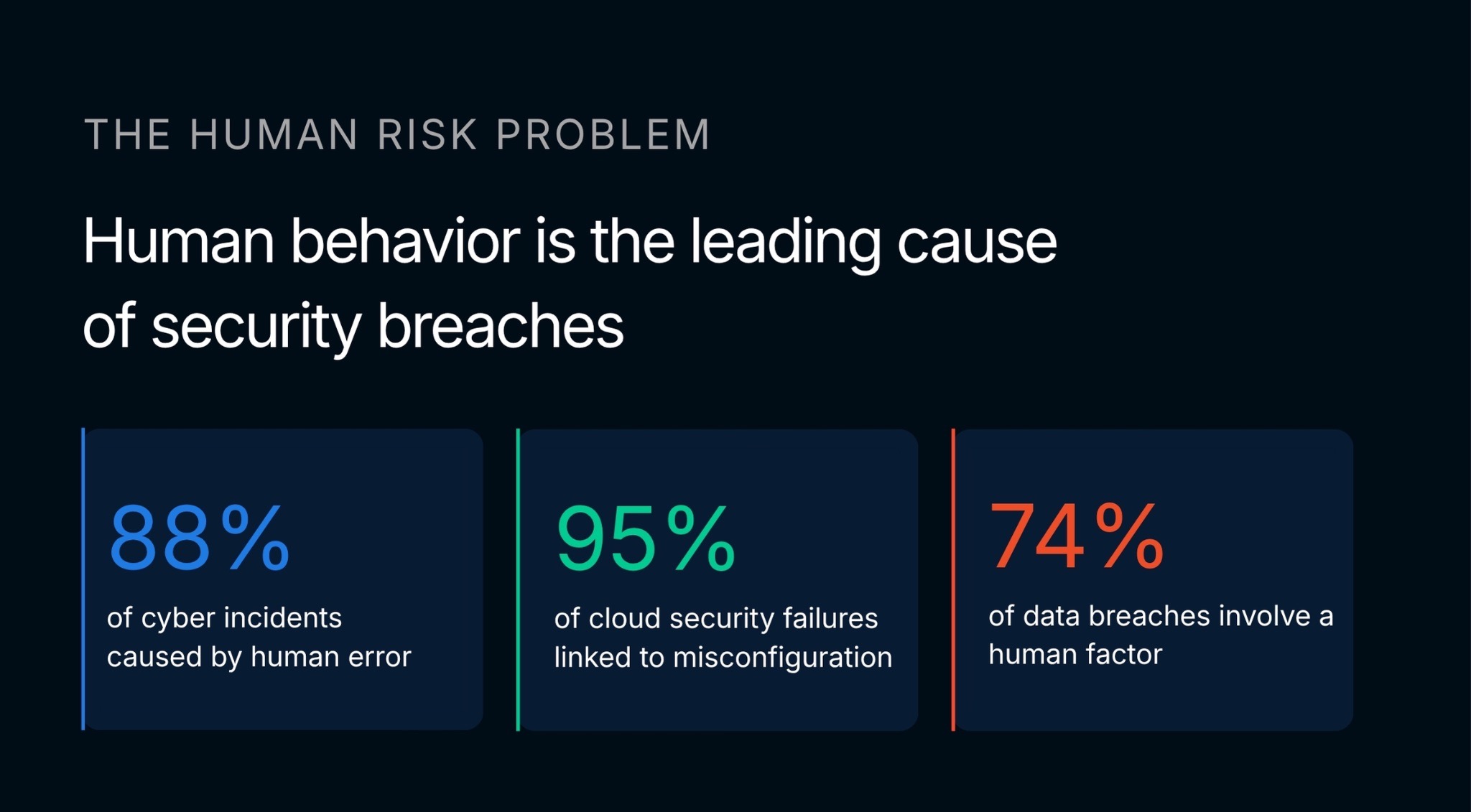
Statistics reveal that humans remain the primary vulnerability in cybersecurity. As many as 88% of cyber incidents were caused by human errors. The human element contributes to 60% or more of breaches often through social engineering credential misuse or simple mistakes.
According to recent industry reports from 2025 and 2026, human factors appear in at least 74% of data breaches. Cloud security failures due to human error and misconfigurations reach 95% in some analyses. These issues directly impact SOC 2 controls particularly in risk assessment monitoring and change management.
Without structured intelligence, organizations rely on manual tracking and periodic training. This creates gaps that auditors flag and attackers exploit.
Implementing Human Risk Intelligence for Compliance Success
Rather than treating all employees as equal security risks, HRI enables organizations to identify, measure, and reduce individual and organizational risk through data-driven insights. It aggregates data from multiple sources. These include security awareness training outcomes, phishing simulation results, identity and access logs and endpoint behaviors. It creates a continuous, quantifiable view of organizational human risk posture.
Instead of static reports, HRI delivers dynamic scores and insights. It identifies high-risk individuals, departments and behaviors. It also highlights positive patterns from vigilant employees.
By integrating HRI into compliance programs, organizations can move beyond checkbox exercises and build a proactive, measurable approach to managing human-related compliance risks.
Key Elements to Look for in a HRI Platform
An effective HRI platform goes beyond basic monitoring. It provides a proactive, intelligence-driven approach to managing human-related risks in organizations. Here are the core capabilities you should prioritize:
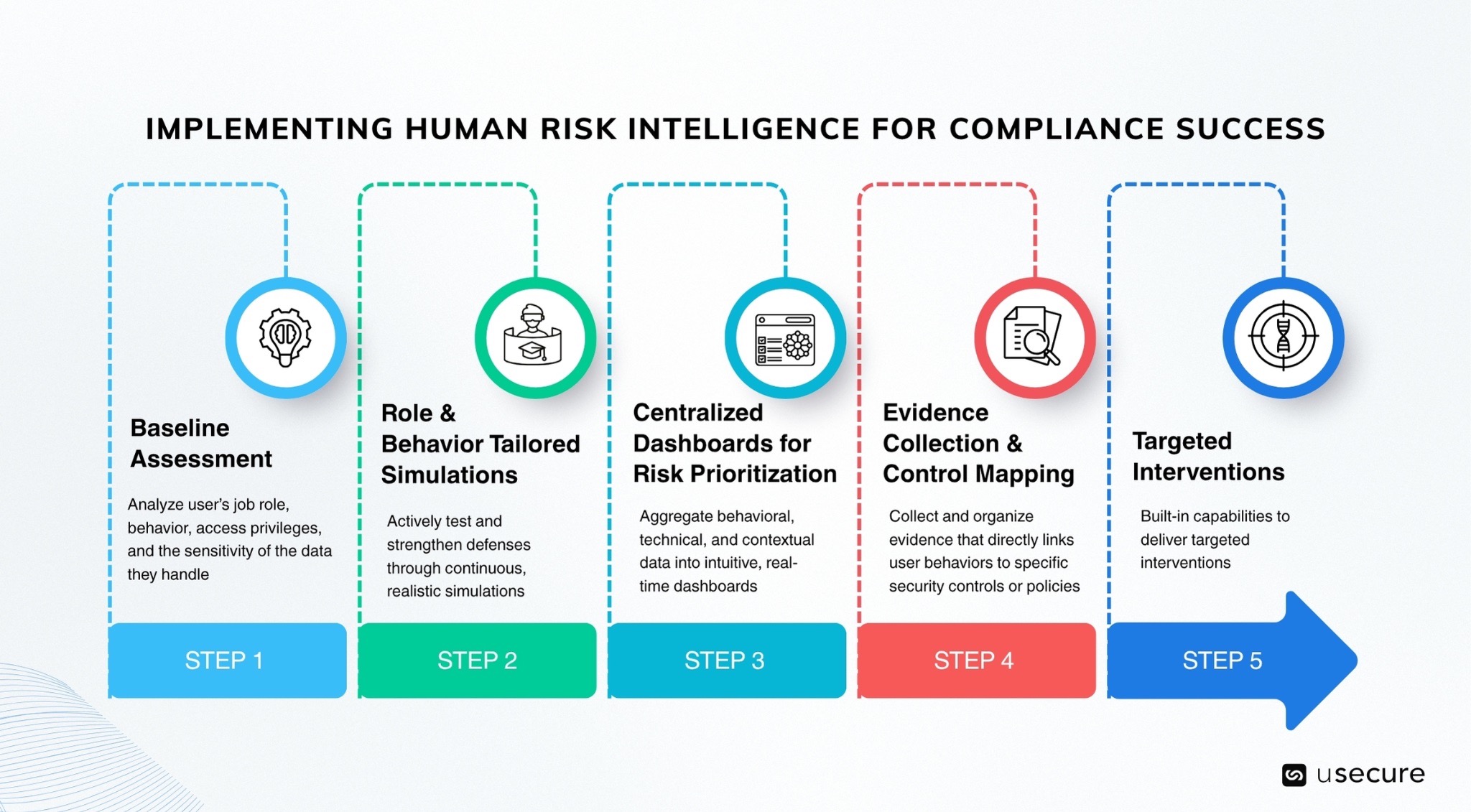
- Baseline Assessments of User Risk Profiles: The platform should begin by establishing a comprehensive baseline for each user’s risk profile. This involves analyzing their job role, behavior, access privileges, and the sensitivity of the data they handle. A strong baseline serves as the foundation for detecting meaningful deviations. Look for platforms that use behavioral analytics and contextual data to create dynamic, evolving risk scores for individuals and groups.
- Ongoing, Role- and Behavior-Tailored Simulations: The best HRI platforms don’t just observe; they actively test and strengthen defenses through continuous, realistic simulations. These should be customized to specific roles (e.g., finance, engineering, executive) and observed behavioral patterns. Simulations might include phishing campaigns, simulated data exfiltration attempts, or social engineering scenarios. The goal is to measure actual human resilience, identify weak points, and deliver personalized training to build a continuous learning loop.
- Centralized Dashboards for Risk Prioritization: Effective platforms aggregate vast amounts of behavioral, technical, and contextual data into intuitive, real-time dashboards. These dashboards should highlight the highest-priority risks using clear risk scoring. Look for strong visualization tools, customizable alerts, and the ability to correlate human behavior with security events for faster, more accurate prioritization.
- Automated Evidence Collection and Control Mapping: Manual evidence gathering is time-consuming and error-prone. A mature HRI platform should automatically collect and organize evidence that directly links user behaviors to specific security controls or policies. This makes compliance audits, investigations, and remediation efforts significantly more efficient.
- Support for a Culture of Continuous Improvement Through Targeted Interventions: The most advanced platforms don’t stop at detection; they drive behavioral change. Look for built-in capabilities to deliver targeted interventions such as just-in-time training, coaching nudges, policy reminders, or automated access adjustments based on risk levels. The platform should track the effectiveness of these interventions over time and feed insights back into the system, creating a virtuous cycle of risk reduction and cultural reinforcement.
Turning HRI Signals into Evidence for Trust Services Criteria
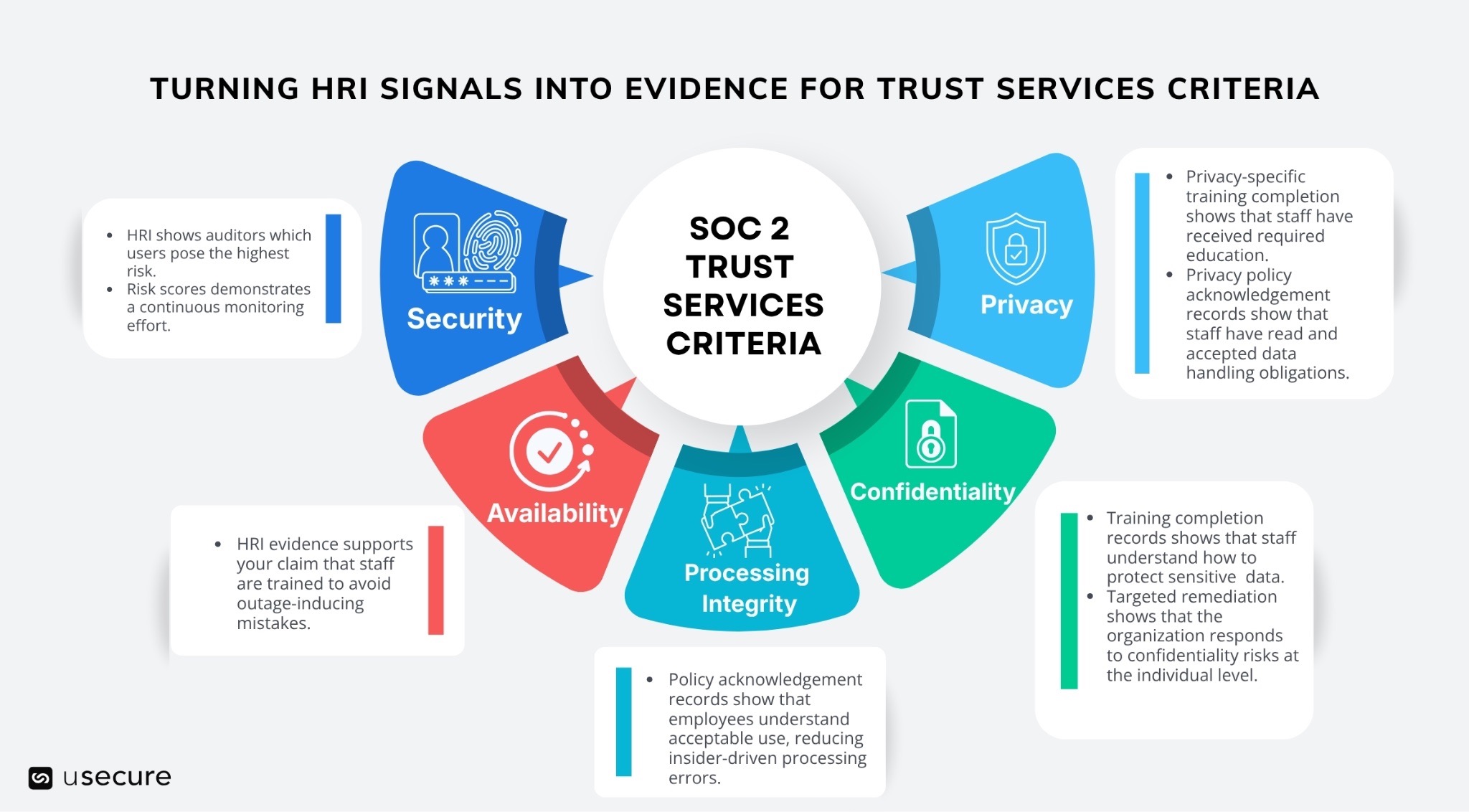
In SOC 2, Trust Services Criteria (TSC) are the standardized benchmarks used by auditors to evaluate and report on a company's internal controls and how well they manage their data. Developed by the AICPA (American Institute of Certified Public Accountants), they are organized into five distinct categories that measure system reliability and data protection. HRI aggregates employee security behavior data into per-user and organization-level risk scores and serves as evidence across SOC 2's five criteria.
- Security: The foundational baseline required for all SOC 2 audits. It evaluates how well an organization protects its systems and data against unauthorized access, disclosure, or damage.
- HRI directly evidences the human layer of your security controls. It shows auditors which users pose the highest risk based on factors such as seniority, access levels, and security-related behaviors. Risk scores trending over time also demonstrates a continuous monitoring effort.
- Availability: Assesses whether systems and data are accessible and operational as promised to meet business objectives and Service Level Agreements (SLAs).
- Human error is a primary cause of unplanned downtime. HRI evidence supports your claim that staff are trained to avoid outage-inducing mistakes. Training completion rates, especially for incident response and business continuity modules, show that staff can respond to and recover from disruptions (A1.2).
- Processing Integrity: Ensures that system processing is accurate, complete, authorized, and timely.
- Accurate processing depends on users not being compromised or manipulated into inputting fraudulent data. Policy acknowledgement records captured by HRI show that employees handling data entry and processing understand acceptable use, reducing insider-driven processing errors (PI1.2). Low phishing susceptibility scores evidence that staff are less to be socially engineered into bypassing authorization controls over data processing.
- Confidentiality: Focuses on protecting sensitive information, such as business plans or intellectual property, from unauthorized disclosure.
- Confidential data leaks are often human-caused. HRI tracks the behaviors most likely to lead to disclosure. Completion records for data-classification and data-handling training modules, visible within HRI, demonstrate that staff understand how to protect sensitive business information (C1.1). Targeted remediation for high-risk users, based on HRI insights, demonstrates to auditors that the organization responds to confidentiality risks at the individual level.
- Privacy: Evaluates how well the organization collects, uses, retains, and disposes of personal information in accordance with its privacy policies.
- Privacy compliance depends on employees understanding and following data protection obligations. GDPR, HIPAA, and other privacy-specific training completion tracked via HRI shows that staff handling personal data have received required education (P6.1). Privacy policy acknowledgement records also provide a timestamped audit trail that staff have read and accepted data handling obligations.
The Future of SOC 2 Compliance with Human Centered Intelligence
As threats evolve and regulations tighten, Human Risk Intelligence will become essential. HRI turns the biggest vulnerability into a measurable strength by transforming raw human signals into Trust Services Criteria evidence. It helps you confidently demonstrate your security posture and position your business for sustainable growth in a risk-filled world.
Investing in Human Risk Intelligence today helps prepare your organization for tomorrow’s audits and threats. Want to learn more about SOC 2 and how to turn human risk into organisational resilience? Explore the demo hub to see our security awareness solution and the wider human risk suite in action.
BOOK A DEMO
See Human Risk Intelligence in action
A 30-minute walkthrough of how to cut human risk across your users, tailored to MSPs and IT teams.
Subscribe to newsletter

Discover how professional services firms reduce human risk with usecure
See how IT teams in professional services use usecure to protect sensitive client data, maintain compliance, and safeguard reputation — without disrupting billable work.
Related posts
Explore more insights, updates, and resources from usecure.

NIS2 Directive: Why Human Risk Intelligence Is Now Mandatory for EU Organizations

ISO/IEC 27001 Compliance: How Human Risk Intelligence Provides the Measurable Evidence Auditors Demand