A comprehensive guide to understanding ISO/IEC 27001

Published on
July 12, 2023
Read time
5 mins

A comprehensive guide to understanding ISO/IEC 27001

Published on
July 12, 2023
Read time
5 mins
Category
5 min read

A comprehensive guide to understanding ISO/IEC 27001

Published on
12 Jul 23

Table of contents

Subscribe to newsletter

By clicking Sign Up you're confirming that you agree with our Terms and Conditions.
Thank you! Your submission has been received!
Oops! Something went wrong while submitting the form.

ISO/IEC 27001 is the leading international standard for information security management systems (ISMS), jointly published by ISO and IEC. It gives organizations a structured framework, built on confidentiality, integrity, and availability, for identifying risks and protecting sensitive data. Certification demonstrates that a company meets rigorous, independently verified security practices, helping build stakeholder trust, win business, and reduce breach risk. The standard's 11 clauses and 93 Annex A controls cover everything from risk assessment to incident response. Notably, Clause 7.2.2 requires staff security awareness training, making employee education a mandatory part of achieving and maintaining compliance.

With cyber threats becoming increasingly sophisticated, organisations must take proactive steps to protect their sensitive information. One effective approach is implementing the ISO/IEC 27001 standard. Let’s explore the significance of ISO/IEC 27001 and how this internationally recognised standard can fortify your organisation’s security practices.

In this blog, we’ll cover:

  • What is ISO/IEC 27001?
  • Why is ISO/IEC 27001 highly respected worldwide?
  • What does it mean to be ISO/IEC 27001 certified?
  • What are the 3 principles of ISO/IEC 27001?
  • What is the structure of ISO/IEC 27001 and what are the clauses?
  • How can ISO/IEC 27001 help with your organisation’s day-to-day operation?
  • What are the key benefits of getting ISO/IEC 27001 Certification?
  • Is providing data security training to employees part of ISO/IEC 27001 requirements?
  • How usecure can help you fulfil ISO/IEC 27001 requirements
  • Start training your employees now to achieve better information security

What is ISO/IEC 27001?

  • Understanding the abbreviation and joint publication
  • While commonly known as ISO/IEC 27001, it is important to note that the official abbreviation for the International Standard on Requirements for information security management is ISO/IEC 27001.
  • The official abbreviation means it is a joint publication by two renowned organisations: The International Organization for Standardization (ISO) and the International Electrotechnical Commission (IEC). The number signifies that it was published under the responsibility of Subcommittee 27 (on Information Security, Cybersecurity and Privacy Protection) of ISO’s and IEC’s Joint Technical Committee on Information Technology (ISO/IEC JTC 1).
  • ISO/IEC 27001 is regularly updated to reflect the ever-changing landscape of technology and ISO/IEC 27001:2022 is the latest version.

Why is ISO/IEC 27001 highly respected worldwide?

Achieving certification to ISO/IEC 27001 serves as a powerful testament to your organisation's dedication to effectively managing information with utmost security and safety. This internationally recognised standard, widely adopted across the globe, holds significant value for stakeholders and customers.

ISO/IEC 27001 is the world's best-known standard for information security management systems (ISMS). It defines the requirements an ISMS must meet.
– International Organization for Standardization

According to the latest ISO Survey, there are 96,709 valid ISO/IEC 27001 certificates reported across 76 participating accreditation bodies (covering 179,877 individual sites globally) spanning diverse economic sectors, with information technology leading adoption by a wide margin.

What does it mean to be ISO/IEC 27001 certified?

The ISO/IEC 27001 standard offers a robust system to manage risks associated with data security. The ISO standard provides:

  • Comprehensive guidance to companies on establishing, implementing, maintaining, and continuously improving an information security management system.
  • A structured approach to managing sensitive information, identifying vulnerabilities, and implementing appropriate security controls.

Compliance with ISO/IEC 27001 signifies that an organisation has pursued the highest standards and principles, ensuring that the organisation follow best practices for safeguarding the data it owns or handles.

ISO/IEC 27001 plays a vital role in helping organisations cultivate a risk-aware culture, allowing them to strengthen their overall security posture. It is recommended that all organisations regardless of the size and industry, seek compliance with ISO/IEC 27001.

What are the 3 principles of ISO/IEC 27001?

Confidentiality, Integrity, and Availability, also known as The CIA Triad, are the fundamental concepts in ISO/IEC 27001. These principles serve as a framework for designing and evaluating information security measures and ensuring the protection of valuable data assets.
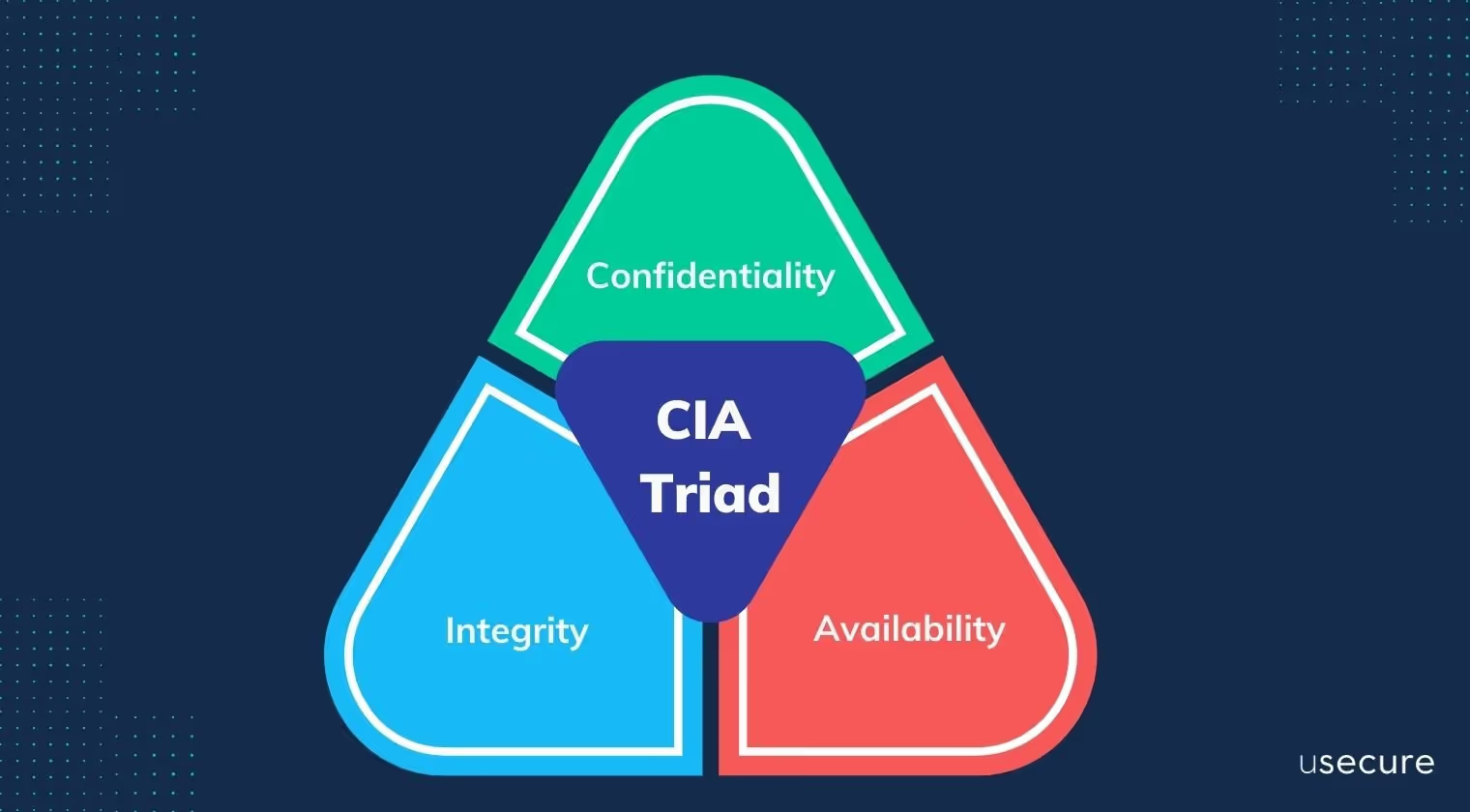
CIA Triad
  • Confidentiality: Confidentiality refers to the assurance that information is accessible only to authorised individuals or entities.
    Example of how to implement security measures: Train your staff on the importance of confidentiality, data handling procedures, and the risks associated with unauthorised disclosure.
  • Integrity: Integrity means the accuracy, completeness, and trustworthiness of information throughout its lifecycle.
    Example of how to implement security measures: Regularly back up critical data and implement processes to verify the integrity of backups.
  • Availability: Availability refers to the accessibility and usability of information by authorised individuals whenever they need it.
    Example of how to implement security measures: Ensure reliable and secure data restoration in case of incidents.

There is an interdependent relationship among the three elements of the CIA Triad. For instance, when confidentiality is prioritised to an extremely high level, it can potentially result in reduced data availability. Therefore, finding the balance within the Triad while operating with limited resources becomes a critical consideration for organisations to ponder upon.

By equipping employees with knowledge of the CIA Triad, organisations can reduce the likelihood of security incidents and promote a strong security mindset throughout the workforce.

What is the structure of ISO/IEC 27001 and what are the clauses?

ISO/IEC 27001 encompasses 11 clauses and 93 controls from Annex A. These elements work together to facilitate the establishment and upkeep of an effective Information Security Management System (ISMS).

The ISO/IEC 27001 structure is broken down  into two major components:

  1. Mandatory clauses
  2. The first part of the ISO/IEC 27001 standard lists 11 clauses (0–10), with only 4–10 being the clauses a company must implement to be ISO/IEC 27001 compliant.
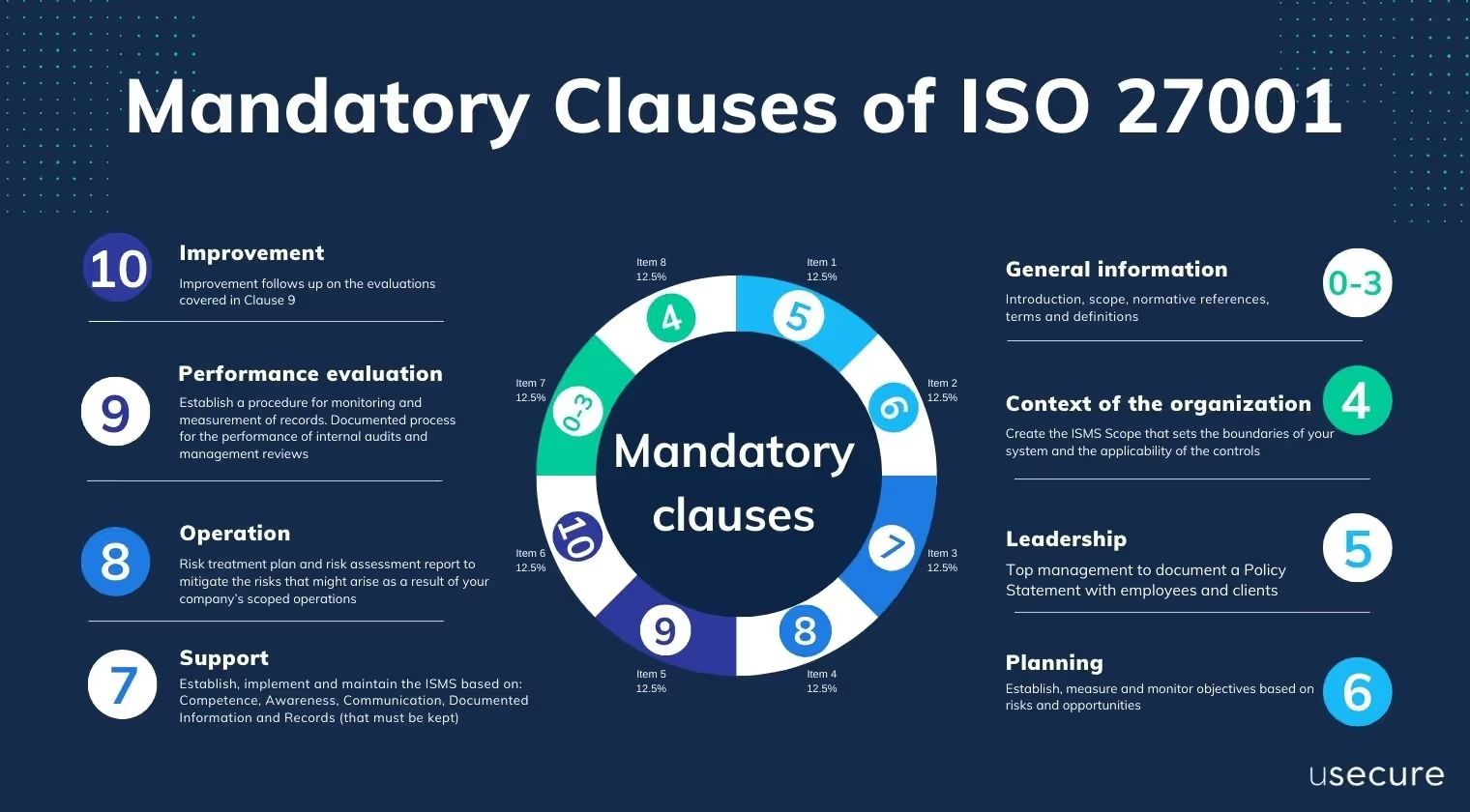
Mandatory Clauses of ISO 27001
  1. Annex A controls
  2. The second part, called Annex A, provides guidelines for 93 security controls in 4 themes. Companies can select controls that apply to their specific operations and create relevant security risk assessments.
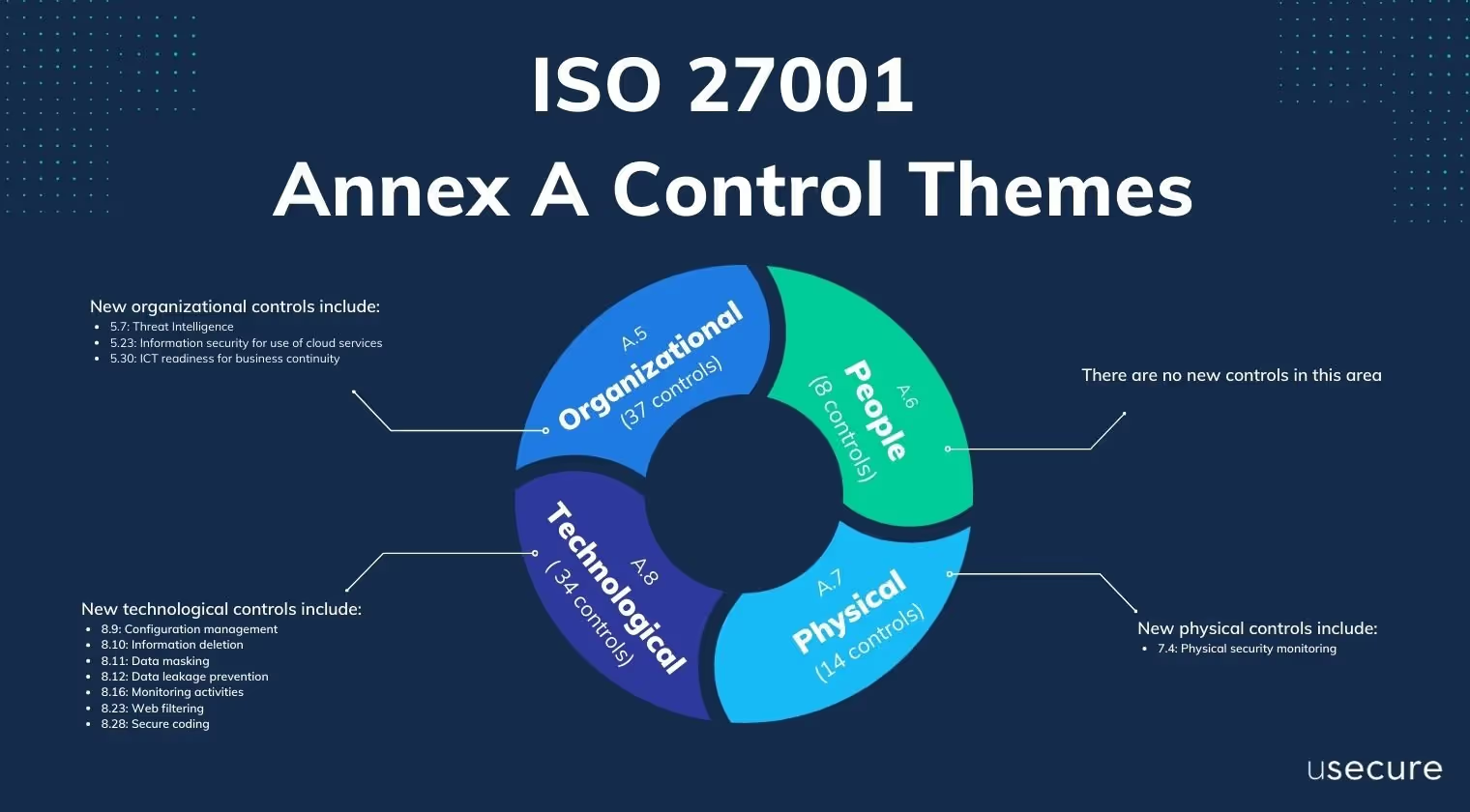
ISO 27001 Annex A Control Themes

How can ISO/IEC 27001 help with your organisation’s day-to-day operation?

By adopting the guidance of ISO/IEC 27001 and establishing a strong foundation for safeguarding data and committing to information security, businesses can:

  • identify and address vulnerabilities and weaknesses in their information security practices,
  • minimise vulnerabilities,
  • proactively fortify their security defences to mitigate potential risks, and
  • safeguarding against the potential consequences of information breaches and cyberattacks.

What are the key benefits of getting ISO/IEC 27001 Certification?

ISO/IEC 27001 certification offers numerous benefits for organisations. It helps achieve compliance with data protection regulations and proves the reliability of an organisation's information security management systems. By adopting ISO/IEC 27001, businesses can:

  • Achieve compliance: By implementing the necessary controls and processes, businesses can ensure they meet legal obligations and avoid potential penalties. Compliance with ISO/IEC 27001 demonstrates a commitment to protecting sensitive information and maintaining the privacy of customers' data.
  • Prove the reliability of your Infosec Management Systems: ISO/IEC 27001 certification provides independent verification that an organisation's information security management systems (ISMS) are reliable and effective. It demonstrates that the organisation has established a systematic approach to identifying and mitigating information security risks.
  • Win new business in the international market: ISO/IEC 27001 is an internationally recognised standard for information security management systems. For companies intending to expand into the international market, achieving ISO/IEC 27001 enables foreign customers to gain a clear understanding of the company's capabilities in managing and safeguarding their data. This not only instils confidence in potential clients but also positions the company as an internationally recognised and trustworthy partner.
  • Grow stakeholders' trust: ISO/IEC 27001 certification enhances stakeholders' trust in an organisation's information security practices. Customers and partners are increasingly concerned about the protection of their data and want to work with organisations that prioritise security. ISO/IEC 27001 certification provides third-party validation which helps organisations to foster stronger business relationships with stakeholders.
  • Gain a competitive edge: In a competitive marketplace, ISO/IEC 27001 certification sets organisations apart from their competitors. ISO/IEC 27001 certification can be a deciding factor for potential clients who prioritise data protection, providing a clear competitive advantage and helping businesses attract new customers.
  • Reduce the risk of breaches: Implementing ISO/IEC 27001 helps organisations reduce the risk of security incidents and data breaches, particularly those caused by human error. ISO/IEC 27001 emphasises the importance of employee training, awareness, and best practices, leading to a security-conscious culture.
  • Control your IT risk: ISO/IEC 27001 provides a framework that helps organisations identify and manage risks associated with information technology, ensuring that vulnerabilities are identified, assessed, and properly addressed. By proactively managing IT risks, businesses can mitigate potential IT threats.

By embracing ISO/IEC 27001, businesses can demonstrate their commitment to protecting sensitive information and maintaining the highest standards of information security.

Is providing data security training to employees part of ISO/IEC27001 requirements?

In adherence to ISO/IEC 27001 requirements, providing data security training to employees is an essential component.

Clause 7.2.2 of the standard mandates organisations to offer information security awareness training to their staff. By equipping your workforce with the necessary resources and fostering a culture of vigilance, you can empower your employees to carry out their roles efficiently.

How usecure can help you fulfil ISO/IEC 27001 requirements

We are dedicated to helping organisations fulfil ISO/IEC 27001 requirements through our comprehensive suite of solutions. Here's how we can assist you every step of the way:

  • Identify staff risk areas: Our platform allows you to enrol employees in a short gap analysis quiz, providing valuable insights into their individual information security risks. By understanding these areas of vulnerability, you can tailor your training and awareness programs to address specific needs.
  • Automate regular training programs: With our software, you can automate regular training programs that target the identified risk areas from the gap analysis. Our platform provides bite-sized training courses, enriched with engaging videos and interactive content. The setup and configuration are simple, allowing you to effortlessly track staff training progress and ensure consistent knowledge enhancement.
  • Engaging courses with a wide range of security topics: Our training courses cover the world’s most important cybersecurity compliances and regulations, such as GDPR, HIPAA and PCI. In addition, the courses include the most popular security topics, such as cloud security, phishing, social engineering, password security, data protection, and so much more!
  • Run phishing tests: To bolster your organisation's defences against phishing attacks, usecure enables you to deploy simulated phishing tests. By identifying which users may be vulnerable to spear-phishing, you can automatically enrol compromised users in follow-up courses, reinforcing their awareness and reducing the risk of future incidents.
  • Manage policies with ease: In addition to training, usecure simplifies policy management by centralising your documents in a secure platform and notifying staff of policy releases and updates. This allows efficient communication and tracking of eSign approvals, as well as ensuring you have a clear trail of policy adherence.
  • Demonstrate compliance: With usecure, you can easily demonstrate your compliance efforts. Our platform provides custom reports on training adoption, phishing simulation results, and policy approvals. It enables you to showcase your compliance progress and demonstrate how human risk is reducing over time. These are valuable information to internal stakeholders and external auditors.

Start training your employees now to achieve better information security!

ISO/IEC 27001 empowers organisations to safeguard their data assets and build trust with clients. Whether you have questions, need further information, or are interested in knowing the features of our solutions, check out our page for Security Awareness Training for ISO/IEC 27001. For more information, book a demo with our team or download our comprehensive eBook for free.

You can also explore our blog for in-depth insights on effectively navigating global regulations and standards with usecure. Connect with us today and embark on your compliance journey.

Subscribe to newsletter

BOOK A DEMO

See usecure in action

A 30-minute walkthrough of how to cut human risk across your users, tailored to MSPs and IT teams.

Get a Demo

Subscribe to newsletter

By clicking Sign Up you're confirming that you agree with our Terms and Conditions.
Thank you! Your submission has been received!
Oops! Something went wrong while submitting the form.

ISO/IEC 27001 is the leading international standard for information security management systems (ISMS), jointly published by ISO and IEC. It gives organizations a structured framework, built on confidentiality, integrity, and availability, for identifying risks and protecting sensitive data. Certification demonstrates that a company meets rigorous, independently verified security practices, helping build stakeholder trust, win business, and reduce breach risk. The standard's 11 clauses and 93 Annex A controls cover everything from risk assessment to incident response. Notably, Clause 7.2.2 requires staff security awareness training, making employee education a mandatory part of achieving and maintaining compliance.

With cyber threats becoming increasingly sophisticated, organisations must take proactive steps to protect their sensitive information. One effective approach is implementing the ISO/IEC 27001 standard. Let’s explore the significance of ISO/IEC 27001 and how this internationally recognised standard can fortify your organisation’s security practices.

In this blog, we’ll cover:

  • What is ISO/IEC 27001?
  • Why is ISO/IEC 27001 highly respected worldwide?
  • What does it mean to be ISO/IEC 27001 certified?
  • What are the 3 principles of ISO/IEC 27001?
  • What is the structure of ISO/IEC 27001 and what are the clauses?
  • How can ISO/IEC 27001 help with your organisation’s day-to-day operation?
  • What are the key benefits of getting ISO/IEC 27001 Certification?
  • Is providing data security training to employees part of ISO/IEC 27001 requirements?
  • How usecure can help you fulfil ISO/IEC 27001 requirements
  • Start training your employees now to achieve better information security

What is ISO/IEC 27001?

  • Understanding the abbreviation and joint publication
  • While commonly known as ISO/IEC 27001, it is important to note that the official abbreviation for the International Standard on Requirements for information security management is ISO/IEC 27001.
  • The official abbreviation means it is a joint publication by two renowned organisations: The International Organization for Standardization (ISO) and the International Electrotechnical Commission (IEC). The number signifies that it was published under the responsibility of Subcommittee 27 (on Information Security, Cybersecurity and Privacy Protection) of ISO’s and IEC’s Joint Technical Committee on Information Technology (ISO/IEC JTC 1).
  • ISO/IEC 27001 is regularly updated to reflect the ever-changing landscape of technology and ISO/IEC 27001:2022 is the latest version.

Why is ISO/IEC 27001 highly respected worldwide?

Achieving certification to ISO/IEC 27001 serves as a powerful testament to your organisation's dedication to effectively managing information with utmost security and safety. This internationally recognised standard, widely adopted across the globe, holds significant value for stakeholders and customers.

ISO/IEC 27001 is the world's best-known standard for information security management systems (ISMS). It defines the requirements an ISMS must meet.
– International Organization for Standardization

According to the latest ISO Survey, there are 96,709 valid ISO/IEC 27001 certificates reported across 76 participating accreditation bodies (covering 179,877 individual sites globally) spanning diverse economic sectors, with information technology leading adoption by a wide margin.

What does it mean to be ISO/IEC 27001 certified?

The ISO/IEC 27001 standard offers a robust system to manage risks associated with data security. The ISO standard provides:

  • Comprehensive guidance to companies on establishing, implementing, maintaining, and continuously improving an information security management system.
  • A structured approach to managing sensitive information, identifying vulnerabilities, and implementing appropriate security controls.

Compliance with ISO/IEC 27001 signifies that an organisation has pursued the highest standards and principles, ensuring that the organisation follow best practices for safeguarding the data it owns or handles.

ISO/IEC 27001 plays a vital role in helping organisations cultivate a risk-aware culture, allowing them to strengthen their overall security posture. It is recommended that all organisations regardless of the size and industry, seek compliance with ISO/IEC 27001.

What are the 3 principles of ISO/IEC 27001?

Confidentiality, Integrity, and Availability, also known as The CIA Triad, are the fundamental concepts in ISO/IEC 27001. These principles serve as a framework for designing and evaluating information security measures and ensuring the protection of valuable data assets.

CIA Triad
  • Confidentiality: Confidentiality refers to the assurance that information is accessible only to authorised individuals or entities.
    Example of how to implement security measures: Train your staff on the importance of confidentiality, data handling procedures, and the risks associated with unauthorised disclosure.
  • Integrity: Integrity means the accuracy, completeness, and trustworthiness of information throughout its lifecycle.
    Example of how to implement security measures: Regularly back up critical data and implement processes to verify the integrity of backups.
  • Availability: Availability refers to the accessibility and usability of information by authorised individuals whenever they need it.
    Example of how to implement security measures: Ensure reliable and secure data restoration in case of incidents.

There is an interdependent relationship among the three elements of the CIA Triad. For instance, when confidentiality is prioritised to an extremely high level, it can potentially result in reduced data availability. Therefore, finding the balance within the Triad while operating with limited resources becomes a critical consideration for organisations to ponder upon.

By equipping employees with knowledge of the CIA Triad, organisations can reduce the likelihood of security incidents and promote a strong security mindset throughout the workforce.

What is the structure of ISO/IEC 27001 and what are the clauses?

ISO/IEC 27001 encompasses 11 clauses and 93 controls from Annex A. These elements work together to facilitate the establishment and upkeep of an effective Information Security Management System (ISMS).

The ISO/IEC 27001 structure is broken down  into two major components:

  1. Mandatory clauses
  2. The first part of the ISO/IEC 27001 standard lists 11 clauses (0–10), with only 4–10 being the clauses a company must implement to be ISO/IEC 27001 compliant.
Mandatory Clauses of ISO 27001
  1. Annex A controls
  2. The second part, called Annex A, provides guidelines for 93 security controls in 4 themes. Companies can select controls that apply to their specific operations and create relevant security risk assessments.
ISO 27001 Annex A Control Themes

How can ISO/IEC 27001 help with your organisation’s day-to-day operation?

By adopting the guidance of ISO/IEC 27001 and establishing a strong foundation for safeguarding data and committing to information security, businesses can:

  • identify and address vulnerabilities and weaknesses in their information security practices,
  • minimise vulnerabilities,
  • proactively fortify their security defences to mitigate potential risks, and
  • safeguarding against the potential consequences of information breaches and cyberattacks.

What are the key benefits of getting ISO/IEC 27001 Certification?

ISO/IEC 27001 certification offers numerous benefits for organisations. It helps achieve compliance with data protection regulations and proves the reliability of an organisation's information security management systems. By adopting ISO/IEC 27001, businesses can:

  • Achieve compliance: By implementing the necessary controls and processes, businesses can ensure they meet legal obligations and avoid potential penalties. Compliance with ISO/IEC 27001 demonstrates a commitment to protecting sensitive information and maintaining the privacy of customers' data.
  • Prove the reliability of your Infosec Management Systems: ISO/IEC 27001 certification provides independent verification that an organisation's information security management systems (ISMS) are reliable and effective. It demonstrates that the organisation has established a systematic approach to identifying and mitigating information security risks.
  • Win new business in the international market: ISO/IEC 27001 is an internationally recognised standard for information security management systems. For companies intending to expand into the international market, achieving ISO/IEC 27001 enables foreign customers to gain a clear understanding of the company's capabilities in managing and safeguarding their data. This not only instils confidence in potential clients but also positions the company as an internationally recognised and trustworthy partner.
  • Grow stakeholders' trust: ISO/IEC 27001 certification enhances stakeholders' trust in an organisation's information security practices. Customers and partners are increasingly concerned about the protection of their data and want to work with organisations that prioritise security. ISO/IEC 27001 certification provides third-party validation which helps organisations to foster stronger business relationships with stakeholders.
  • Gain a competitive edge: In a competitive marketplace, ISO/IEC 27001 certification sets organisations apart from their competitors. ISO/IEC 27001 certification can be a deciding factor for potential clients who prioritise data protection, providing a clear competitive advantage and helping businesses attract new customers.
  • Reduce the risk of breaches: Implementing ISO/IEC 27001 helps organisations reduce the risk of security incidents and data breaches, particularly those caused by human error. ISO/IEC 27001 emphasises the importance of employee training, awareness, and best practices, leading to a security-conscious culture.
  • Control your IT risk: ISO/IEC 27001 provides a framework that helps organisations identify and manage risks associated with information technology, ensuring that vulnerabilities are identified, assessed, and properly addressed. By proactively managing IT risks, businesses can mitigate potential IT threats.

By embracing ISO/IEC 27001, businesses can demonstrate their commitment to protecting sensitive information and maintaining the highest standards of information security.

Is providing data security training to employees part of ISO/IEC27001 requirements?

In adherence to ISO/IEC 27001 requirements, providing data security training to employees is an essential component.

Clause 7.2.2 of the standard mandates organisations to offer information security awareness training to their staff. By equipping your workforce with the necessary resources and fostering a culture of vigilance, you can empower your employees to carry out their roles efficiently.

How usecure can help you fulfil ISO/IEC 27001 requirements

We are dedicated to helping organisations fulfil ISO/IEC 27001 requirements through our comprehensive suite of solutions. Here's how we can assist you every step of the way:

  • Identify staff risk areas: Our platform allows you to enrol employees in a short gap analysis quiz, providing valuable insights into their individual information security risks. By understanding these areas of vulnerability, you can tailor your training and awareness programs to address specific needs.
  • Automate regular training programs: With our software, you can automate regular training programs that target the identified risk areas from the gap analysis. Our platform provides bite-sized training courses, enriched with engaging videos and interactive content. The setup and configuration are simple, allowing you to effortlessly track staff training progress and ensure consistent knowledge enhancement.
  • Engaging courses with a wide range of security topics: Our training courses cover the world’s most important cybersecurity compliances and regulations, such as GDPR, HIPAA and PCI. In addition, the courses include the most popular security topics, such as cloud security, phishing, social engineering, password security, data protection, and so much more!
  • Run phishing tests: To bolster your organisation's defences against phishing attacks, usecure enables you to deploy simulated phishing tests. By identifying which users may be vulnerable to spear-phishing, you can automatically enrol compromised users in follow-up courses, reinforcing their awareness and reducing the risk of future incidents.
  • Manage policies with ease: In addition to training, usecure simplifies policy management by centralising your documents in a secure platform and notifying staff of policy releases and updates. This allows efficient communication and tracking of eSign approvals, as well as ensuring you have a clear trail of policy adherence.
  • Demonstrate compliance: With usecure, you can easily demonstrate your compliance efforts. Our platform provides custom reports on training adoption, phishing simulation results, and policy approvals. It enables you to showcase your compliance progress and demonstrate how human risk is reducing over time. These are valuable information to internal stakeholders and external auditors.

Start training your employees now to achieve better information security!

ISO/IEC 27001 empowers organisations to safeguard their data assets and build trust with clients. Whether you have questions, need further information, or are interested in knowing the features of our solutions, check out our page for Security Awareness Training for ISO/IEC 27001. For more information, book a demo with our team or download our comprehensive eBook for free.

You can also explore our blog for in-depth insights on effectively navigating global regulations and standards with usecure. Connect with us today and embark on your compliance journey.

Subscribe to newsletter

Subscribe to newsletter

By clicking Sign Up you're confirming that you agree with our Terms and Conditions.
Thank you! Your submission has been received!
Oops! Something went wrong while submitting the form.

Discover how professional services firms reduce human risk with usecure

See how IT teams in professional services use usecure to protect sensitive client data, maintain compliance, and safeguard reputation — without disrupting billable work.

Related posts

Explore more insights, updates, and resources from usecure.