Wie Coegi Cloud mit usecure die Tickets zum Thema Security Awareness auf null reduzierte

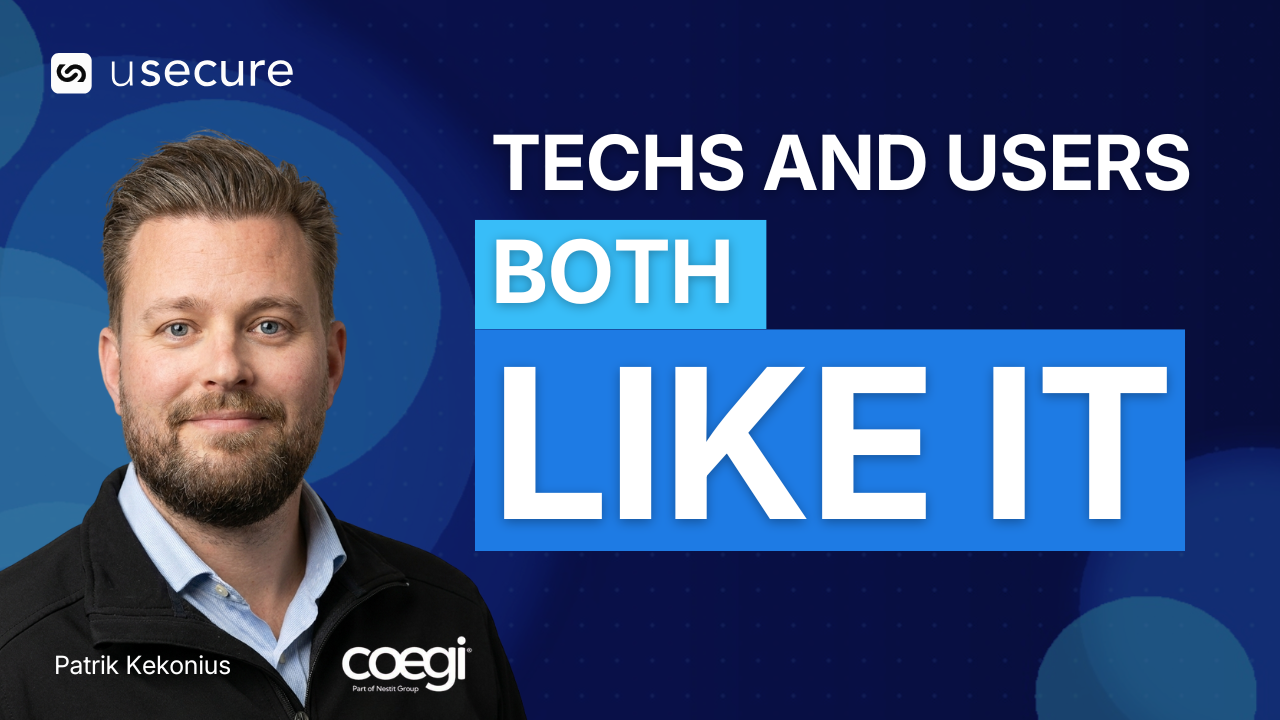
Table of contents
Subscribe to newsletter
KEY TAKEAWAYS
Sie hacken sich nicht ein – sie loggen sich ein: Wie ein nordischer MSP sein Security-Awareness-Angebot neu aufgestellt hat
Als Phishing im Norden Europas immer schwerer zu erkennen wurde, brauchte Coegi Cloud einen Security-Awareness-Service, der sich ohne Mehraufwand über den gesamten Kundenstamm ausrollen lässt.
Coegi Cloud ist seit 2004 als MSP tätig, betreut rund 400 Kunden von Göteborg und Stockholm aus und gehört zu einer größeren nordischen Unternehmensgruppe mit Standorten in Schweden, Norwegen und Finnland. Bis vor wenigen Jahren hatte Phishing in der Region ein Glaubwürdigkeitsproblem.
Die Angriffe waren Kopien englischsprachiger Kampagnen, durch Übersetzungstools gejagt, die jede Zeile verstümmelten. Die Bedrohung wirkte abstrakt, fast schon lächerlich. Patrik Kekonius, Director of Sales bei Coegi Cloud, bringt es so auf den Punkt: „Alle Phishing-Versuche, die sie gesehen haben, waren einfach zum Lachen. Niemand hätte darauf geklickt.“
Das machte Security Awareness zu einem schwierigen Verkaufsthema. Die Gefahr schien immer nur andere zu betreffen.
Dann änderten sich die Angriffe.
Als Phishing aufhörte, ein Witz zu sein
Die Nachrichten wurden besser. Die Lokalisierung wurde professioneller. Angreifer gaben sich als vertraute Marken oder leitende Kolleginnen und Kollegen aus – und das Ziel verschob sich von Ransomware hin zum Identitätsdiebstahl.
„Die Mails sehen aus, als kämen sie von Microsoft, vom CEO oder vom CFO. Und das ist ziemlich beängstigend“, sagt Patrik.
Die wichtigste Veränderung ist jene, die keinen Alarm auslöst. Wer über gültige Zugangsdaten verfügt, muss sich nicht gewaltsam Zugang verschaffen. Patrik beschreibt es so: „Sie hacken sich nicht in die Umgebungen unserer Kunden. Sie loggen sich einfach ein – und das löst keinerlei Warnmeldungen aus.“ Eine legitime Anmeldung mit gestohlener Identität sieht exakt aus wie eine echte.
Auch die Angreifer machen ihre Hausaufgaben: Sie recherchieren Rollen auf LinkedIn, um genau dann zuzuschlagen, wenn jemand unter Druck steht und besonders klickfreudig ist – und setzen zunehmend KI ein, um den Köder zu schärfen. Die klassischen Warnsignale wie holprige Grammatik und seltsame Domains sind weitgehend verschwunden.
Wie real das geworden ist, erlebte Patrik, als ihn die Inhaberin eines Kunden sichtlich aufgewühlt anrief. Einer ihrer eigenen Kunden, ein großes Pharmaunternehmen, hatte eine täuschend echte E-Mail erhalten, die scheinbar von ihren Mitarbeitenden stammte. Die Untersuchung ergab: Acht Führungskräfte dieses Kunden hatten auf einen Link von einer Domain geklickt, die sie zu kennen glaubten. Technisch war die Lösung Phishing-resistente MFA. Die übergeordnete Lehre war jedoch eindeutig: Den Menschen zu sagen, sie sollten vorsichtig sein, reichte nicht mehr aus.
Eine Plattform, die Technik-Teams und Endanwendende gleichermaßen annehmen
Überzeugt hat Patrik nicht ein einzelnes Feature, sondern wie wenig Reibung die Lösung auf beiden Seiten des Schreibtischs erzeugt – etwas, das bei Security-Tools selten vorkommt. „In diesem Fall mögen es beide Seiten, und ich finde es großartig, wie einfach die Bedienung ist“, sagt er.
Diese Einfachheit setzt sich bis ins Setup fort. Patrik verantwortet den Vertrieb, nicht die Technik – und konnte den Tenant eines Kunden dennoch selbst anbinden und die Synchronisation der Nutzenden starten, ganz ohne technisches Projekt drumherum. „Ich weiß nicht einmal mehr, ob es eine Stunde gedauert hat. Die gesamte Plattform ist absolut selbsterklärend.“ Nutzende werden automatisch aufgenommen und wieder entfernt, sobald sich der Tenant des jeweiligen Kunden ändert. So entfällt der administrative Aufwand beim Skalieren des Service.
Mehr als Phishing-Simulationen
Coegi Cloud suchte mehr als ein isoliertes Phishing-Tool – und usecure bündelt mehrere Bausteine eines Human-Risk-Programms an einem Ort:
- uLearn für Security-Awareness-Training und Wissenslückenanalyse
- uPhish für Phishing-Simulationen
- uBreach für das Monitoring von Datenlecks im Dark Web
- uPolicy für die digitale Verteilung und Bestätigung von Richtlinien
Die Trainingsbibliothek löste außerdem ein konkretes regionales Problem. Einem Kunden auf dem Weg zur ISO 27001-Zertifizierung schrieben die Auditoren vor, einen schwedischen Kurs namens DISA (Digital Information Security Training for All) zu absolvieren. Statt diese Mitarbeitenden auf eine externe Plattform zu schicken, verwies ein usecure-Mitarbeiter Patrik auf die Course Library – dort war der Kurs bereits vorhanden. Er konnte ihn allen Nutzenden zuweisen, verpflichtend machen und Abschluss- sowie Bestehensquoten zentral nachverfolgen. „Sie waren überglücklich. Ich habe danach unzählige E-Mails bekommen, in denen sich die Leute einfach nur bedankt haben.“
Beim Richtlinienmanagement war es dasselbe Bild. Bestätigungen einzuholen bedeutete früher, Unterschriften hinterherzulaufen. Patrik bringt es so auf den Punkt: „Da musste irgendein armer Kollege oder eine arme Kollegin herumlaufen und diese Unterschriften einsammeln.“ Mit uPolicy wurde aus dieser manuellen Aufgabe ein nachverfolgbarer Compliance-Nachweis in Echtzeit – besonders wertvoll für Kunden, die einer bestimmten Regulierung unterliegen.
Und es gibt einen Aspekt, den er als Vertriebler besonders schätzt: Ein uBreach-Domain-Scan fördert fast immer etwas zutage. Das liefert ihm einen echten Anlass, das Gespräch mit einem neuen Interessenten zu eröffnen.
In jedem Paket – aus Überzeugung
Coegi Cloud behält usecure nicht den Premium-Accounts vor. Die Lösung ist in jeder Service-Stufe enthalten, auch im Einstiegspaket. „Es spielt keine Rolle, ob du im Basis- oder Einstiegspaket bist – du bekommst usecure trotzdem. So sehr schätzen wir diesen Service“, sagt Patrik und ergänzt, dass die Plattform aus seiner Sicht deutlich unter ihrem tatsächlichen Wert bepreist ist.
Für einen MSP ist genau diese Einheitlichkeit entscheidend. Ein Security-Awareness-Service lässt sich weitaus besser skalieren, wenn er über den gesamten Kundenstamm hinweg identisch ausgerollt wird – statt für jeden Account separat verkauft, konfiguriert und verwaltet zu werden.
Der Beweis: ein Live-Vergleich über den gesamten Kundenstamm
Patrik braucht keine Umfrage, um den Unterschied zu erkennen – seine eigene Kundenbasis liefert ihm zwei Vergleichsgruppen: Kunden mit usecure und Kunden ohne.
Isoliert er in seinen Support-Daten die usecure-Gruppe, verschwinden die Tickets zu Phishing, Richtlinien und Schulungen nahezu vollständig. „Wenn man die herausnimmt, die usecure nutzen, haben die überhaupt keine Tickets mehr.“ Bei den Kunden außerhalb dieser Gruppe laufen sie weiterhin auf. Ein kontrolliertes Experiment ist das nicht, aber als operatives Signal lässt es sich kaum entkräften – und der Unterschied ist von Dauer.
Inzwischen arbeiten über 350 Endanwendende bei den Kunden von Coegi Cloud mit usecure, automatisch über die jeweiligen Tenants hinzugefügt und entfernt, mit Schulungen und Simulationen als festem Bestandteil des laufenden Programms. Für Patrik zahlt das genau auf den Zweck des Service ein: „Mission erfüllt, denn genau darum geht es uns: das Sicherheitsbewusstsein zu stärken.“
Auf die Frage, was er einem anderen MSP in den nordischen Ländern raten würde, der noch abwägt, antwortet er ohne Umschweife: „Ich würde ihnen auf jeden Fall empfehlen, usecure zu kontaktieren.“
Security Awareness einfacher skalieren
Für MSPs besteht die Herausforderung nicht darin, ein weiteres Securityprodukt ins Portfolio zu nehmen. Es geht darum, einen Service über alle Kunden hinweg konsistent zu liefern, ohne dass der Betreuungsaufwand mitwächst. Das Beispiel von Coegi Cloud zeigt, wie das aussieht, wenn Schulungen, Phishing-Simulationen, Richtlinienmanagement und Credential-Monitoring über eine einzige, für MSPs entwickelte Plattform laufen.
Erfahren Sie, wie Sie mit usecure Human Risk Management über Ihren gesamten Kundenstamm skalieren – ohne den Aufwand mitzuskalieren. Demo buchen und die Plattform in Aktion erleben.
BOOK A DEMO
See Human Risk Intelligence in action
A 30-minute walkthrough of how to cut human risk across your users, tailored to MSPs and IT teams.
Subscribe to newsletter

Erfahren Sie, wie Unternehmen im Bereich Professional Services mit usecure menschliche Risiken reduzieren
Erfahren Sie, wie IT-Teams in Professional-Services-Unternehmen usecure nutzen, um sensible Kundendaten zu schützen, Compliance-Anforderungen zu erfüllen und ihre Reputation zu wahren — ohne abrechenbare Arbeit zu beeinträchtigen.
Related posts
Explore more insights, updates, and resources from usecure.
Wie Human Risk Intelligence die DSGVO-Compliance-Lücke schließt