Human Risk Intelligence (HRI): Was es ist und warum es wichtig ist
.avif)
%20(1).png)
Table of contents
Subscribe to newsletter
Zusammenfassung
Human Risk Intelligence (HRI) ist der nächste Schritt über Human Risk Management (HRM) hinaus und hilft Organisationen, von reiner Awareness-Aktivität zu einem klareren, besser umsetzbaren Blick auf das menschliche Risiko zu gelangen.
Indem HRI Signale aus Awareness, Phishing, Identität und Zugriff zusammenführt, hilft es Teams zu erkennen, wo das Risiko tatsächlich liegt, was zuerst zu beheben ist und wie sich Verbesserungen im Zeitverlauf belegen lassen. Anders als herkömmliche HRM-Ansätze, die oft periodisch und aktivitätsgetrieben sind, ist HRI kontinuierlich, risikogetrieben und darauf ausgerichtet, die Gefährdung messbar zu reduzieren.
Im Kern betrachtet HRI das menschliche Risiko durch vier praktische Perspektiven: Zielwert, Awareness, Hygiene und Zugriff. Während KI-gestützte Bedrohungen immer überzeugender werden und die Governance-Anforderungen weiter steigen, brauchen Organisationen einen intelligenteren Weg, um Maßnahmen zu priorisieren und Fortschritte sichtbar zu machen.
Bereit für den nächsten Schritt von Human Risk Management zu Human Risk Intelligence?
Was ist Human Risk Intelligence (HRI)?
Human Risk Intelligence ist die Praxis, Daten zum menschlichen Risiko in entscheidungsreife Erkenntnisse zu verwandeln.
Die meisten Organisationen erfassen bereits einige der richtigen Zutaten. Sie führen Awareness-Schulungen durch, testen Nutzer mit Phishing-Simulationen, ermutigen zur Meldung verdächtiger E-Mails und überwachen Identitätskontrollen, privilegierte Zugriffe und die Konten-Hygiene. Das Problem ist, dass diese Signale oft in unterschiedlichen Tools liegen, isoliert ausgewertet werden und am Ende als Aktivität statt als Gefährdung berichtet werden.
HRI ändert das.
Es führt diese Signale zusammen, um ein klareres Bild davon zu schaffen, wo das menschliche Risiko in der gesamten Organisation liegt. Dazu gehört nicht nur, wer eher einen Fehler macht, sondern auch, wessen Kompromittierung am schwersten wöge, wo Identitätsschwächen die Wahrscheinlichkeit einer Kontoübernahme erhöhen und wo Zugriffsrechte den Schaden vergrößern könnten, falls ein Konto missbraucht wird.
%20-%20Assets%20(1).png)
Das ist der eigentliche Wandel. Beim menschlichen Risiko geht es nicht nur darum, ob jemand klickt. Es geht auch darum, ob die Person wahrscheinlich ins Visier gerät, ob ihr Konto leicht zu kompromittieren ist und was ein Angreifer erreichen könnte, wenn er hineingelangt.
„Die Zukunft des menschlichen Risikos liegt nicht in mehr Aktivität. Sie liegt in besserer Intelligence, schnellerem Handeln und klareren Belegen. In einer Bedrohungslandschaft, die von KI, wachsendem Governance-Druck und überlasteten Teams geprägt ist, müssen IT-Verantwortliche wissen, wo das Risiko liegt, was zuerst zu beheben ist und wie sich Fortschritte belegen lassen. Genau das leistet HRI.“
— Charles Preston, CEO & Founder bei usecure
Eine hilfreiche Art, den Wandel von HRM zu HRI zu verstehen, ist der Unterschied zwischen regelmäßigen Gesundheits-Check-ups und einer kontinuierlichen Gesundheitsüberwachung. HRM hilft Ihnen, die Grundlagen im Griff zu behalten: Schulung, Phishing-Tests, Richtlinienprüfungen und Reporting. All das ist wichtig – ebenso wie regelmäßige Check-ups und gesunde Gewohnheiten wichtig sind.
HRI baut darauf auf. Es führt die richtigen Signale zusammen, hilft Ihnen zu erkennen, wo sich Risiko aufzubauen beginnt, zeigt Ihnen, worauf Sie sich zuerst konzentrieren sollten, und lässt Sie erkennen, ob sich die Dinge im Zeitverlauf tatsächlich verbessern. Es geht nicht nur darum zu zeigen, dass Aktivität stattgefunden hat. Es geht darum, ein klareres Bild des Risikos zu gewinnen und so darauf zu reagieren, dass Sie es erklären und vertreten können.
Deshalb ist HRI wichtig. Es liefert Organisationen eine konkretere Antwort auf eine geschäftliche Frage: Wo liegt heute unser durch Menschen verursachtes Cyberrisiko, was unternehmen wir dagegen, und wirkt es?
Häufige Missverständnisse über HRI
HRI erhält mehr Aufmerksamkeit, lässt sich aber auch leicht missverstehen. Hier einige der häufigsten Mythen:
- Es ist kein neuer Name für Awareness-Schulungen: Awareness-Programme sind nach wie vor wichtig, doch HRI ist breiter. Es umfasst Verhaltenssignale, die Identitätslage, die Zugriffsgefährdung und den Zielwert. Ein Schulungs-Dashboard allein ist kein HRI.
- Es ist nicht einfach Phishing mit neuem Etikett: Phishing-Simulationen können eine nützliche Eingangsgröße sein, aber sie sind nur ein Signal. HRI wird erst dann aussagekräftig, wenn es Verhaltensdaten mit dem Hygiene- und Zugriffskontext verbindet und daraus Handlungen ableitet.
- Es ist kein Blackbox-Score: Wenn eine Führungskraft fragt, warum ein Nutzer, ein Team oder ein Kunde ein hohes Risiko darstellt, sollte die Antwort klar sein. Gutes HRI ist erklärbar. Es sollte die Treiber hinter der Schlussfolgerung aufzeigen und nicht nur eine undurchsichtige Zahl ausgeben.
- Es ist keine Mitarbeiterüberwachung: Sinn von HRI ist nicht, Menschen um ihrer selbst willen zu überwachen. Es geht darum, die Sicherheitsgefährdung zu erkennen und zu reduzieren. Das bedeutet, relevante Signale verantwortungsvoll zu nutzen, unnötige Daten zu minimieren und Datenschutz-, HR- und rechtliche Aspekte von Anfang an mitzudenken.
- Es ist kein Rip-and-Replace-Projekt: Die meisten Organisationen können mit Tools und Daten beginnen, die sie bereits haben. Bei HRI geht es in der Regel weniger darum, einen komplett neuen Stack zu kaufen, als vielmehr darum, vorhandene Signale zu verbinden, die Priorisierung zu verbessern und eine bessere Möglichkeit zu schaffen, Maßnahmen und Fortschritte nachzuverfolgen.
Human Risk Management vs Human Risk Intelligence
Human Risk Management und Human Risk Intelligence sind eng miteinander verwandt, aber sie sind nicht dasselbe.
Human Risk Management hilft Organisationen, Awareness- und Compliance-Aktivitäten durchzuführen. Human Risk Intelligence baut auf diesen Grundlagen auf, verwandelt Programmdaten jedoch in einen klareren, besser umsetzbaren Blick auf die Gefährdung, damit Teams Maßnahmen priorisieren und eine messbare Verbesserung belegen können.
|
HRM Human Risk Management |
HRI Human Risk Intelligence |
|
|---|---|---|
| Primärer Fokus | Durchführung von Awareness- und Compliance-Aktivitäten | Verstehen und Reduzieren des menschlich bedingten Cyberrisikos |
| Wichtigste Eingangsgrößen | Schulung, Phishing-Simulationen, Richtlinien- und Reporting-Daten | Awareness, Verhalten, Hygiene, Zugriff und Nutzerkontext |
| Funktionsweise | Programmgetrieben und periodisch | Kontinuierlich, kontextbezogen und risikogetrieben |
| Was es zeigt | Aktivität, Teilnahme und Kampagnenergebnisse | Risikogefährdung, zentrale Treiber und Behebungsprioritäten |
| Wie Maßnahmen priorisiert werden | Oft breit angelegt oder manuell | Auf Basis dessen, wer und was die größte Gefährdung verursacht |
| Wie Erfolg gemessen wird | Abschlussquoten, Klickraten und Reporting-Aktivität | Reduzierte Gefährdung, stärkere Kontrollen und messbare Verbesserung |
| Ergebnisse | Größere Programmabdeckung und Awareness-Aktivität | Bessere Priorisierung, schnellere Behebung, klarere Risikoreduzierung und stärkere Governance-Sicherheit |
| Wobei es Teams unterstützt | Sicherheitsprogramme umsetzen und nachverfolgen | Risiko erkennen, Behebungen priorisieren und Fortschritte belegen |
Fazit: HRM hilft Organisationen, Programme zum menschlichen Risiko durchzuführen. HRI hilft ihnen zu verstehen, wo die Gefährdung liegt, was sie reduziert und wie sich die Verbesserung im Zeitverlauf belegen lässt.
Warum HRI gerade jetzt wichtig ist
HRI ist gerade jetzt wichtig, weil das alte, rein auf Awareness ausgerichtete Modell von allen Seiten unter Druck steht. Angreifer nehmen zunehmend Menschen und Identitäten gemeinsam ins Visier, KI erhöht die Raffinesse von Social Engineering, die Governance-Anforderungen werden anspruchsvoller, und von Teams wird verlangt, mit weniger mehr zu leisten.
1. Angreifer nehmen zunehmend Menschen und Identitäten gemeinsam ins Visier
Aktuelle Berichte zu Sicherheitsverletzungen zeigen weiterhin, dass der menschliche Faktor an einem erheblichen Teil der Vorfälle beteiligt bleibt, während der Missbrauch von Zugangsdaten und die Kompromittierung von Konten zu den häufigsten Einfallswegen in Organisationen zählen.
Das ist wichtig, weil die Grenze zwischen menschlichem Risiko und Identitätsrisiko praktisch verschwunden ist.
Einem Angreifer ist es gleichgültig, ob die anfängliche Schwachstelle ein Klick, ein wiederverwendetes Passwort, fehlende MFA, zu weit gefasste Zugriffe oder ein kompromittierter Lieferant war. Ihn interessiert, ob eine Person oder Identität ihm einen Weg zu Werten eröffnet.
Das bedeutet, dass ein enges, rein auf Awareness ausgerichtetes Modell nicht mehr ausreicht. Organisationen brauchen ein vollständigeres Bild davon, wer wahrscheinlich ins Visier gerät, wie leicht sich das Konto ausnutzen lässt und was erreichbar wäre, falls diese Identität kompromittiert wird.
2. KI hat Social Engineering schwerer erkennbar und leichter skalierbar gemacht
KI beschleunigt die menschliche Seite des Cyberrisikos. Sie ermöglicht schnelleres, überzeugenderes Phishing und Impersonation, verringert den Abstand zwischen plumpen und ausgefeilten Angriffen und erleichtert es Angreifern, Sprache und Tonfall an ihre Ziele anzupassen.
Das erhöht die Anforderungen an die Verteidiger. Ein Awareness-Programm nach dem Gießkannenprinzip ist weniger wirksam, wenn Angriffe persönlicher, glaubwürdiger und hartnäckiger werden.
Teams müssen verstehen, welche Nutzer wiederholt anfällig sind, welche Rollen eher ins Visier geraten und wo Identitätsschwächen eine Kompromittierung erleichtern. HRI unterstützt das, indem es Verhaltenssignale mit der Kontolage und dem Geschäftskontext verknüpft, statt jedes Schulungsergebnis oder jeden Phishing-Klick als separates Ereignis zu behandeln.
3. Führungskräfte und Regulierungsbehörden erwarten zunehmend Belege statt Aktivität
Auch der Governance-Druck nimmt zu. Rahmenwerke und Regulierungen verweisen zunehmend auf Cyber-Hygiene, Identitätskontrollen, Schulung, Rechenschaftspflicht und messbares Risikomanagement. Vorstände und Führungsteams stellen anspruchsvollere Fragen zur Wirksamkeit, nicht nur zum Aufwand.
Das schafft ein Problem für Teams, die sich weiterhin allein auf einfache Kennzahlen verlassen. Abschlussquoten und Klickprozentsätze sind nützliche operative Indikatoren, aber sie beantworten nicht die Frage der Führung: Sind wir tatsächlich sicherer als zuvor?
HRI ist besser auf diese Realität ausgerichtet. Es unterstützt ein ergebnisorientiertes Reporting, indem es Risikotreiber, Behebungsprioritäten und Vorher-Nachher-Belege aufzeigt, die vor der Führung Bestand haben.
4. Teams stehen unter wachsendem Druck, mit weniger mehr zu leisten
Der Ressourcendruck ist ein weiterer Grund, warum dies gerade jetzt wichtig ist. Sicherheitsteams sind überlastet. Cyber-Kompetenzen bleiben knapp. Von Organisationen wird erwartet, dass sie das Risiko konsistenter reduzieren – mit begrenzter Zeit und Kapazität.
In diesem Umfeld wird eine bessere Priorisierung unverzichtbar.
HRI hilft Teams, ihre Anstrengungen dort zu bündeln, wo sie die Gefährdung am wahrscheinlichsten reduzieren. Statt die Aufmerksamkeit gleichmäßig auf jeden Nutzer oder jedes Signal zu verteilen, hilft es, Maßnahmen auf die Personen, Identitäten und Zugriffspfade zu lenken, die am wichtigsten sind.
Die vier Säulen von HRI
Im Zentrum von HRI stehen vier praktische Perspektiven, die helfen, Rohdaten in ein klareres Bild der Gefährdung zu verwandeln.
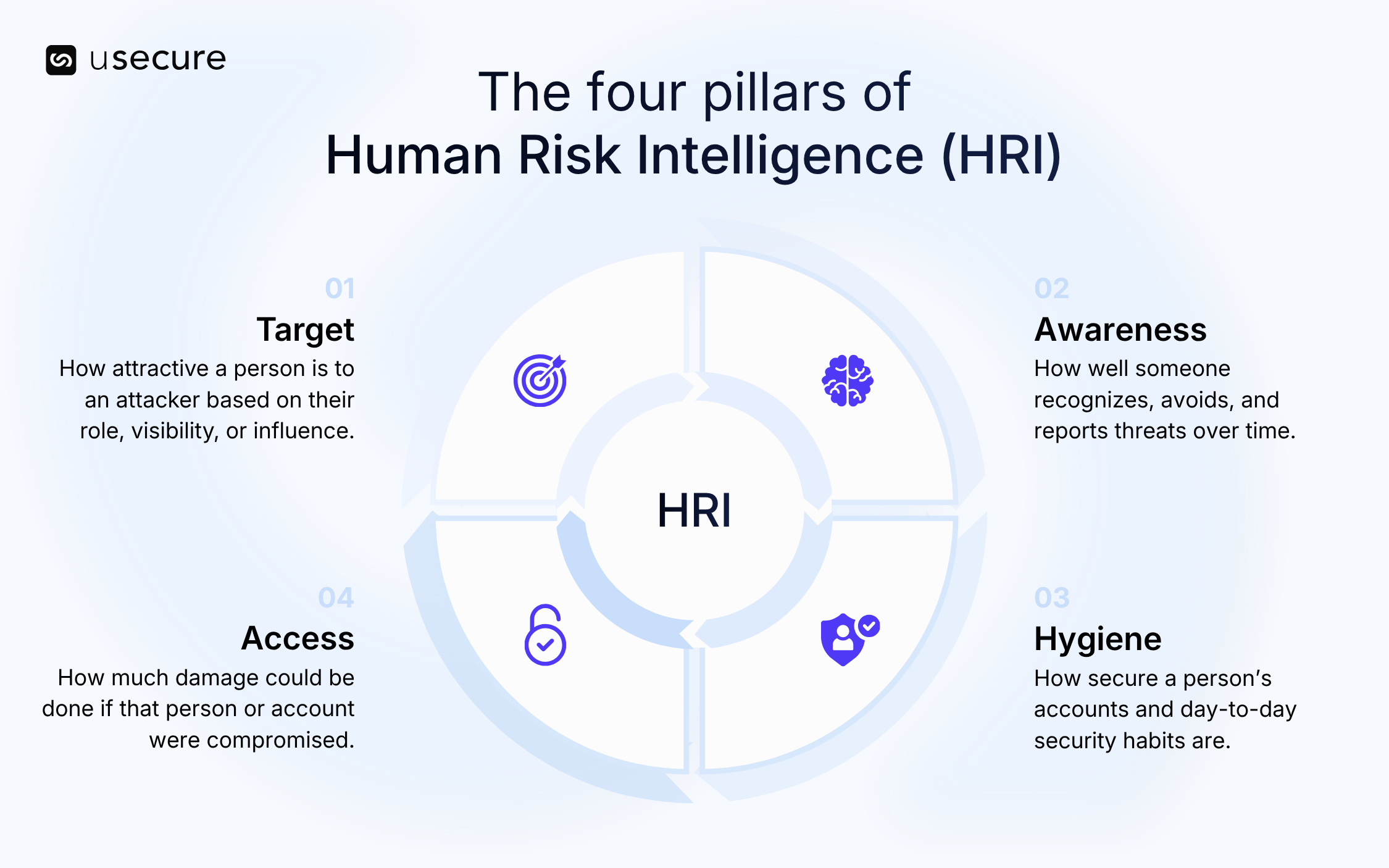
1. Zielwert
Wen Angreifer am wahrscheinlichsten ins Visier nehmen
Nicht jeder Nutzer hat dieselbe Bedeutung. Manche sind sichtbarer, stärker privilegiert oder enger mit wertvollen Geschäftsprozessen verbunden. Führungskräfte, Finanzverantwortliche, Rechtsteams, kundenorientierte Manager und Administratoren ziehen oft mehr Interesse von Angreifern auf sich – wegen dessen, was sie genehmigen, worauf sie zugreifen oder was sie beeinflussen können.
Der Zielwert kann Signale umfassen wie:
- Rolle und Hierarchieebene
- Sichtbarkeit und geschäftlicher Einfluss
- externe Präsenz
- Gefährdung von Unternehmens- oder Privatkonten
Das ist wichtig, weil wertvolle Nutzer nicht wie der Durchschnittsnutzer behandelt werden sollten. Starke HRI-Modelle erkennen sie klar, schützen sie anders und priorisieren sie früher.
2. Awareness
Wie Menschen Bedrohungen erkennen, vermeiden und melden
Awareness geht über den Kursabschluss hinaus und konzentriert sich auf das Verhalten im Zeitverlauf.
Erkennen Menschen verdächtige Aktivitäten? Melden sie sie? Verbessern sie sich? Sind dieselben Nutzer oder Teams wiederholt anfällig? Gibt es Muster, die mit Rolle, Funktion oder Angriffstyp zusammenhängen?
Awareness kann Signale umfassen wie:
- Phishing-Ergebnisse
- Meldequoten
- Zeit bis zur Meldung
- wiederholte Fehler und langfristige Schulungstrends
Entscheidend ist, Awareness als Verhaltenssignal zu behandeln und nicht als Compliance-Kästchen. Wiederholtes Versagen sollte zu einer intelligenteren Intervention führen und nicht nur zur Wiederholung derselben Schulung.
3. Hygiene
Wie sicher Konten und Verhaltensweisen sind
Hygiene misst, wie leicht ein Konto zu kompromittieren ist.
Dazu gehören Faktoren wie, ob MFA aktiviert ist und wie stark sie ist, ob Passwörter exponiert oder schwach sind, ob Konten veraltet oder inaktiv sind, ob Weiterleitungsregeln für E-Mails riskant sind und ob Identitätskontrollen konsistent angewendet werden.
Hygiene kann Signale umfassen wie:
- MFA-Status und -Stärke
- Passwort-Exposition oder -Wiederverwendung
- veraltete oder verwaiste Konten
- riskante Weiterleitungsregeln oder Fehlkonfigurationen
Hygiene ist eine der nützlichsten HRI-Säulen, weil sie oft schnelle, praktische Wege zur Risikoreduzierung aufzeigt.
4. Zugriff
Wie groß der Schaden einer Kompromittierung sein könnte
Zugriff misst die Auswirkung. Wenn ein Konto kompromittiert würde, was könnte der Angreifer erreichen oder tun?
Zwei Nutzer mögen aus Awareness-Sicht ähnlich aussehen, aber wenn einer privilegierten Zugriff auf Finanzsysteme, Kundendaten, Cloud-Administration oder sensible SaaS-Plattformen hat, ist das Geschäftsrisiko völlig unterschiedlich.
Zugriff kann Signale umfassen wie:
- Administrationsrechte und privilegierte Rollen
- Berechtigungen über wichtige Systeme hinweg
- Gefährdung durch Dienstkonten
- Anzeichen von Privilege Creep
Diese Säule ist wichtig, weil sie Teams hilft, anhand des Schadensradius zu priorisieren und nicht nur anhand der Wahrscheinlichkeit.

Ein praktischer Ausgangspunkt für HRI
Eines der größten Missverständnisse über Human Risk Intelligence ist, dass es von Tag eins an eine große Transformation erfordert. In der Praxis beginnt der Weg zu HRI meist mit einer viel einfacheren Verschiebung: die Signale, die Sie bereits haben, vernetzter und stärker entscheidungsorientiert zu nutzen.
HRI beginnt oft damit, Awareness- und Phishing-Daten, Konten-Hygiene, Zugriffskontext und einen klareren Blick darauf, welche Nutzer am wahrscheinlichsten ins Visier geraten, zusammenzuführen. Das Ziel ist nicht, über Nacht ein perfektes Modell aufzubauen. Es geht darum, einen klareren Blick darauf zu gewinnen, wo das menschliche Risiko liegt, was am wichtigsten ist und wo Maßnahmen die größte Wirkung haben.
Für viele Organisationen beginnt das mit drei praktischen Verschiebungen.
%20-%20Assets.png)
Nutzen Sie die Signale, denen Sie bereits vertrauen
Die meisten Organisationen verfügen bereits über wertvolle Daten zu Awareness-Aktivität, Identitätslage und Zugriff. HRI beginnt, wenn diese Signale als Teil desselben Risikobildes behandelt werden und nicht als getrennte Reporting-Stränge.
Konzentrieren Sie sich auf das Wichtigste
Das können wertvolle Personen, schwache Konten-Hygiene, übermäßige Zugriffe oder Muster wiederholt riskanten Verhaltens sein. Ziel ist nicht, alles auf einmal zu analysieren. Es geht darum, die Anstrengungen dort zu bündeln, wo sie das Risiko am schnellsten reduzieren.
Bauen Sie Klarheit und Belege im Zeitverlauf auf
HRI muss nicht vollständig ausgereift starten. Sein Wert wächst, während Organisationen die Sichtbarkeit verbessern, die Priorisierung schärfen und einen klareren Nachweis darüber schaffen, was sich geändert hat und warum.
Das spiegelt das interne HRI-Modell als Schwungrad der kontinuierlichen Verbesserung wider: Signale, Priorisierung, Maßnahmen, Belege und Verbesserung im Zeitverlauf.
Bei HRI geht es nicht darum, bei null anzufangen. Es geht darum, die Signale, die Sie bereits umgeben, in bessere Entscheidungen zum menschlichen Risiko zu verwandeln.
Wie gutes HRI in der Praxis aussieht
Ein gutes HRI-Modell schafft nicht nur mehr Sichtbarkeit. Es hilft Teams, bessere Entscheidungen zu treffen, schneller zu handeln und zu zeigen, was sich geändert hat.
In der Praxis sieht gutes HRI so aus:
- Nutzer und Identitäten mit hohem Risiko sind leicht zu erkennen
- die Gründe für dieses Risiko sind sichtbar und erklärbar
- Maßnahmen werden nach wahrscheinlicher Auswirkung priorisiert
- Verbesserungen lassen sich im Zeitverlauf messen
- das Reporting konzentriert sich auf Gefährdung, Behebung und Belege, nicht nur auf Aktivität
Genau dort wird HRI wirklich nützlich. Es gibt Organisationen einen klareren Weg, die Aktivität rund um das menschliche Risiko mit messbaren Geschäftsergebnissen zu verknüpfen.
Häufige Fehler bei HRI und wie man sie vermeidet
1. HRI als Umetikettierung von HRM behandeln
Der häufigste Fehler ist, dieselben Dashboards „HRI“ zu nennen, ohne das zugrunde liegende Betriebsmodell zu ändern. Wenn die Ergebnisse weiterhin allein auf Abschlüsse, Klicks und Kampagnenaktivität ausgerichtet sind, gibt es keinen wirklichen Unterschied.
So vermeiden Sie es: Ändern Sie die Scorecard. Stellen Sie Gefährdungstrends, priorisierte Behebung und messbare Risikoreduzierung in den Mittelpunkt.
2. Einfachen statt aussagekräftigen Kennzahlen nachjagen
Einfache Kennzahlen sind verlockend, weil sie leicht zu erheben sind. Das Problem ist, dass sie selten belegen, dass das Unternehmen sicherer ist.
So vermeiden Sie es: Nutzen Sie einen kleineren Satz ergebnisorientierter Indikatoren, etwa die Reduzierung wiederholter Fehler, den Anteil wertvoller Nutzer mit schwacher Hygiene, den Abbau von Privilegien oder die mediane Zeit bis zur Behebung von Problemen mit hohem Risiko.
3. Ein Blackbox-Modell bauen, das niemand vertreten kann
Wenn niemand erklären kann, warum ein Nutzer ein hohes Risiko darstellt, wird das Modell kein Vertrauen schaffen. Das gilt besonders in Gesprächen mit Führung, Audit und Einkauf.
So vermeiden Sie es: Beginnen Sie mit einfachen, sichtbaren Treibern. Steigern Sie die Raffinesse im Zeitverlauf, aber halten Sie die Erklärbarkeit stets im Vordergrund.
4. Versuchen, alles auf einmal aufzunehmen
Große Projekte zur Signalintegration geraten oft ins Stocken, weil sie zu schnell zu breit werden. HRI muss nicht mit jedem Tool, jeder Datenquelle und jedem Nutzer starten.
So vermeiden Sie es: Beginnen Sie mit einer fokussierten Kohorte und einem kleinen Satz vertrauenswürdiger Signale. Belegen Sie den Wert und erweitern Sie dann.
5. Risiko erkennen, ohne es schnell genug zu beheben
Erkennung ohne Behebung schafft kaum echten Wert. Wenn Nutzer mit hohem Risiko wochenlang im Rückstand liegen, behält der Angreifer den Vorteil.
So vermeiden Sie es: Verfolgen Sie die Behebungsgeschwindigkeit, automatisieren Sie sichere Korrekturen, wo möglich, und konzentrieren Sie sich zuerst auf Probleme, die hohe Wahrscheinlichkeit mit hoher Auswirkung verbinden.
Häufige Fragen zu Human Risk Intelligence
Was genau ist Human Risk Intelligence?
Human Risk Intelligence ist die Praxis, Awareness-, Identitäts-, Hygiene- und Zugriffssignale zu kombinieren, um einen kontinuierlichen, erklärbaren Blick auf das menschlich bedingte Cyberrisiko zu schaffen. Es hilft Teams zu erkennen, wer am meisten gefährdet ist, warum das wichtig ist, was zu priorisieren ist und wie sich Verbesserung belegen lässt.
Wie unterscheidet sich HRI von Human Risk Management?
Human Risk Management konzentriert sich auf die Durchführung von Programmen wie Schulung, Phishing-Simulationen und Reporting. Human Risk Intelligence nutzt die Ergebnisse dieser Programme zusammen mit Identitäts- und Zugriffssignalen, um Maßnahmen zu priorisieren und messbare Veränderungen der Gefährdung aufzuzeigen.
Brauchen wir neue Tools, um mit HRI zu beginnen?
Nicht zwingend. Viele Organisationen können mit Daten beginnen, die sie bereits haben, etwa Phishing-Ergebnisse, Awareness-Trends, MFA-Lage, Privilegiendaten und Indikatoren der Konten-Hygiene. Neue Tools können helfen, das Modell zu skalieren, aber der erste Schritt ist in der Regel operativ und nicht technisch.
Wie schnell kann HRI Ergebnisse zeigen?
Einige Ergebnisse können schnell sichtbar werden, besonders rund um die Behebung von Hygiene und Zugriff. Verhaltensbezogene Verbesserungen können länger dauern. Ein fokussierter Pilot kann oft innerhalb von ein bis zwei Quartalen glaubwürdige Belege liefern.
Welche Belege interessieren die Führung tatsächlich?
Die Führung möchte in der Regel eine einfache Kette sehen: wie das Risiko vorher aussah, welche Maßnahme ergriffen wurde, was sich danach geändert hat und warum Sie überzeugt sind, dass die Veränderung von Bedeutung war. Das sollte durch eine kleine Zahl ergebnisorientierter Kennzahlen gestützt werden und nicht durch eine lange Liste von Kampagnenstatistiken.
Ist HRI nur für große Unternehmen relevant?
Nein. Das Modell ist für Organisationen jeder Größe relevant, weil es die Priorisierung verbessert. Jedes Team mit begrenzter Zeit und begrenzten Ressourcen profitiert davon zu wissen, welche Nutzer, Identitäten und Behebungen am wichtigsten sind.
Ist HRI nur eine andere Art, über Phishing-Risiko zu sprechen?
Nein. Phishing bleibt eine wichtige Eingangsgröße, aber HRI ist breiter. Es umfasst, wer wahrscheinlich ins Visier gerät, wie leicht das Konto zu kompromittieren ist, welche Zugriffe die Person besitzt und welche Behebung die Gefährdung am wirksamsten reduziert.
Was sollten wir zuerst tun, wenn wir uns in Richtung HRI bewegen wollen?
Beginnen Sie mit einem kleinen Satz vertrauenswürdiger Signale, konzentrieren Sie sich auf die Personen und Gefährdungen, die am wichtigsten sind, und bauen Sie im Zeitverlauf ein klareres Bild des Risikos auf. Ziel ist nicht, alles auf einmal zu analysieren, sondern mit den Informationen, die Sie bereits haben, bessere Entscheidungen zu treffen.
Schlussgedanken
Organisationen brauchen nicht mehr Aktivität um ihrer selbst willen. Sie brauchen besseres Urteilsvermögen, bessere Priorisierung und bessere Belege.
Deshalb ist Human Risk Intelligence wichtig.
Es bietet einen praktischen Weg, über reine Awareness-Kennzahlen hinaus zu etwas Nützlicherem zu gelangen: einem klareren Blick darauf, wo die Gefährdung liegt, welche Maßnahme sie reduziert und wie sich Fortschritte so belegen lassen, dass die Führung ihnen vertrauen kann.
Human Risk Management bleibt wichtig. Es liefert viele der Eingangsgrößen. Doch während KI-Bedrohungen skalieren, die Governance-Anforderungen steigen und Teams wachsendem Druck auf Zeit und Ressourcen ausgesetzt sind, bietet HRI einen klareren Weg, Maßnahmen zu priorisieren, die Gefährdung zu reduzieren und Verbesserung dort zu belegen, wo sie am wichtigsten ist.
BOOK A DEMO
See Human Risk Intelligence in action
A 30-minute walkthrough of how to cut human risk across your users, tailored to MSPs and IT teams.
Subscribe to newsletter

Erfahren Sie, wie Unternehmen im Bereich Professional Services mit usecure menschliche Risiken reduzieren
Erfahren Sie, wie IT-Teams in Professional-Services-Unternehmen usecure nutzen, um sensible Kundendaten zu schützen, Compliance-Anforderungen zu erfüllen und ihre Reputation zu wahren — ohne abrechenbare Arbeit zu beeinträchtigen.
Related posts
Explore more insights, updates, and resources from usecure.